Projects

The work speaks better than we do.

Each deck below was templated, engineered and prefabricated for one specific vessel. Layout, plank widths, margins and equipment interfaces are resolved project by project.

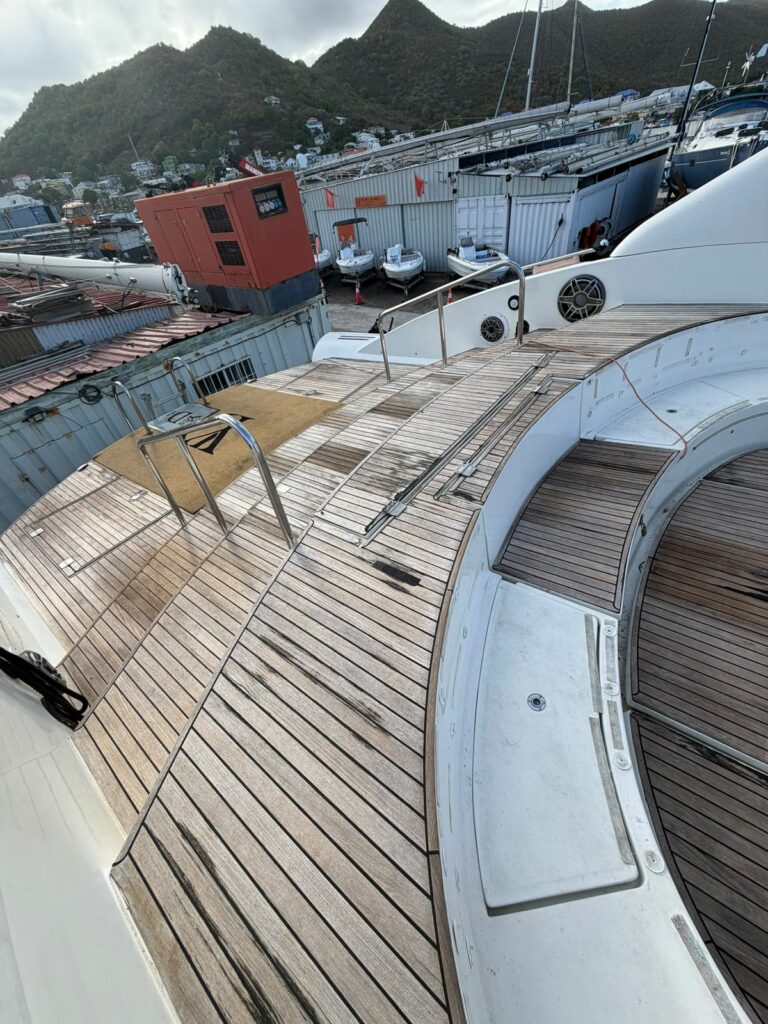
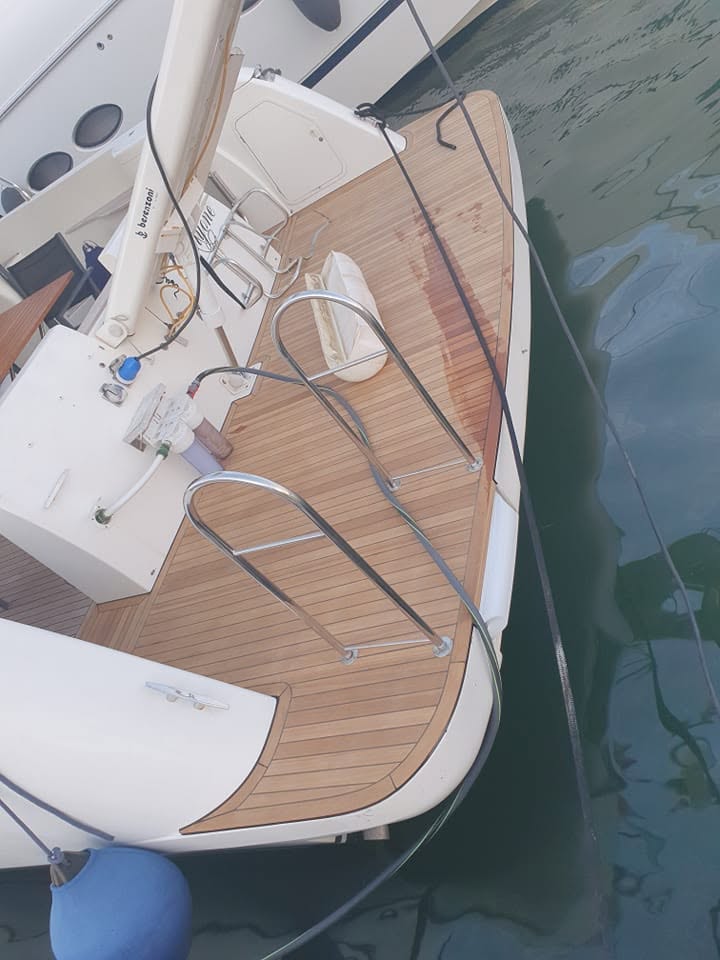
Full deck recaulking
Motor yacht · Mediterranean refit

Full deck recaulking

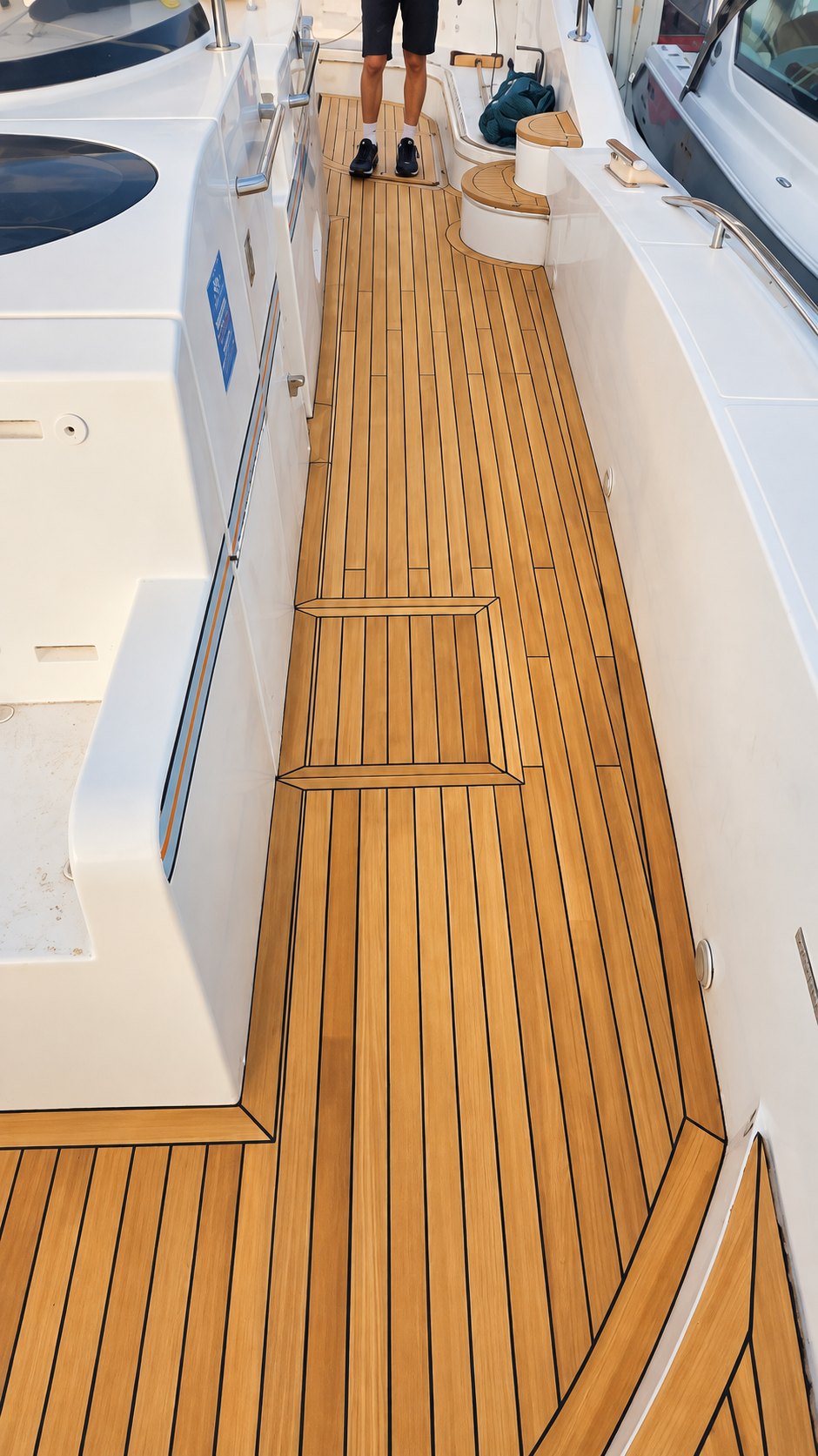
When a teak deck’s caulking begins to fail, the black seams lift, crack or lose their grip on the plank edges, and water starts to track down into the substrate. This project addressed exactly that: the complete removal and renewal of every failed caulking seam across the existing deck, rather than a cosmetic patch over compromised joints.

Each seam was raked out to a clean, sound profile and the plank edges prepared so the new caulk could key properly. With the seams open, we checked local plank adhesion across the deck — the moment a recaulk makes accessible — and addressed the defective areas we found before they could spread beneath a freshly sealed surface. Only then were the seams recharged with marine deck caulk, tooled flush and left to cure.

The whole deck was finish-sanded before handover, bringing the new seams level with the timber and returning an even, uniform surface underfoot. The result is a deck that reads as a single continuous field of teak again, watertight at every joint, with years of service returned to the original planking rather than replaced.

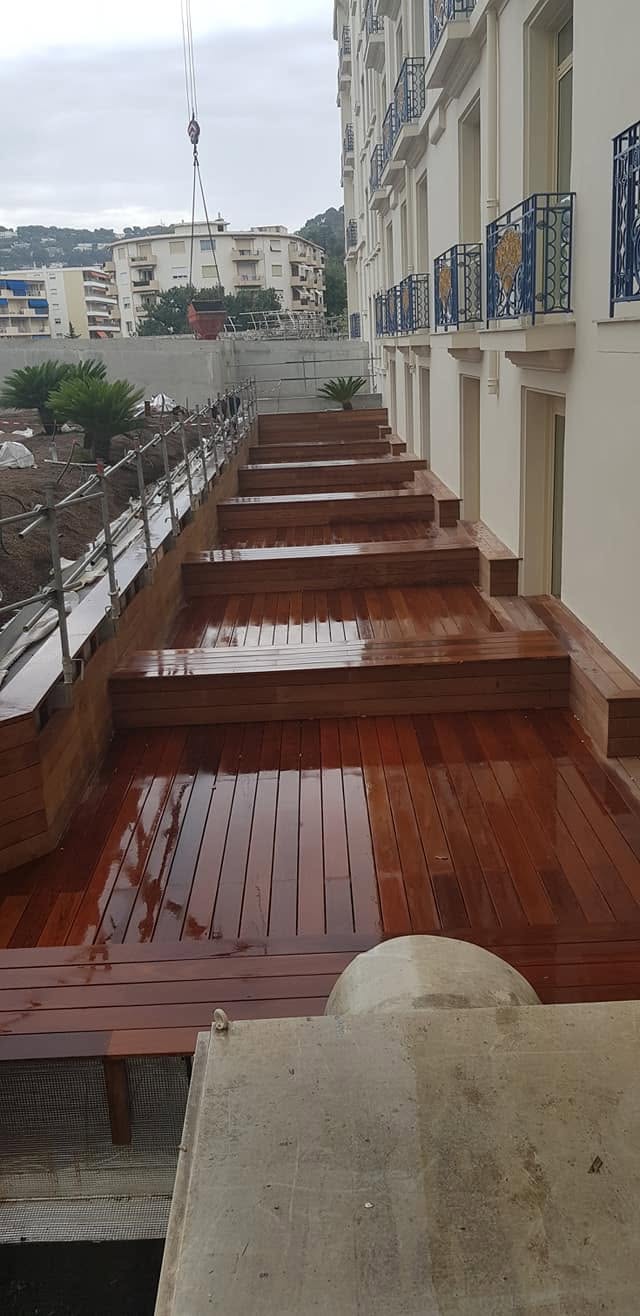
Hospitality · Hotel Martinez, Cannes

Palace hotel terraces

Solid teak, multi-level terraces running along the façade of the Hotel Martinez in Cannes — a landmark address on the Croisette — delivered as part of the hotel’s wider renovation programme. The scope went well beyond flat decking: stepped changes of level between terraces, integrated bench seating and surrounds built around the planters, all resolved in the same continuous language of teak.

Work of this kind is measured against a hospitality standard rather than a marine one. Sightlines are long and public, the timber sits directly underfoot for guests, and the margins around steps, benches and planters are where the eye settles — so every interface had to be clean, flush and consistent from one level to the next. Fabrication and installation were carried out on site, sequenced around an operating renovation with the access and phasing constraints that implies.

The finished terraces give the façade a warm, uniform teak surface that ties the levels together, wears predictably under heavy footfall, and can be sanded and maintained for decades rather than resurfaced. A deck detailed to the expectations of a palace hotel, in a material chosen to age gracefully in full sun and sea air.

Residential · Monaco

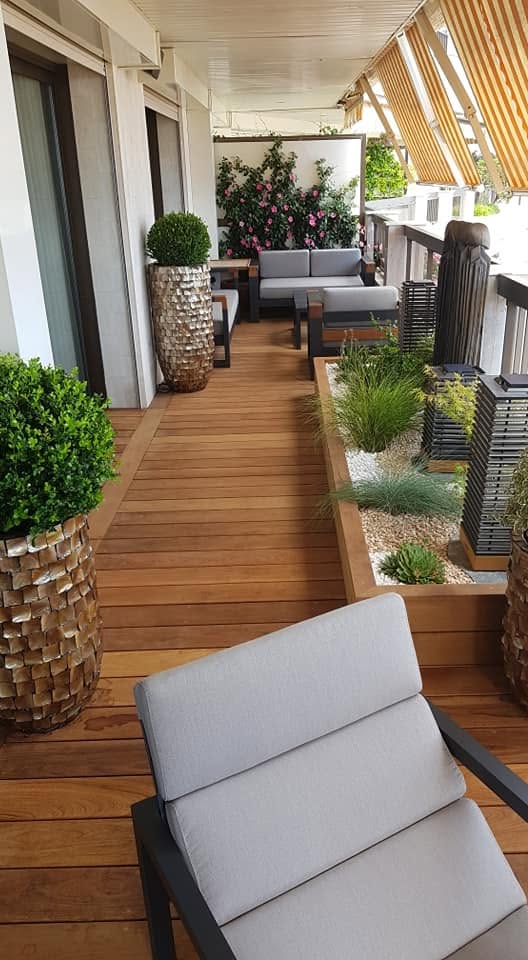
Private apartment terraces

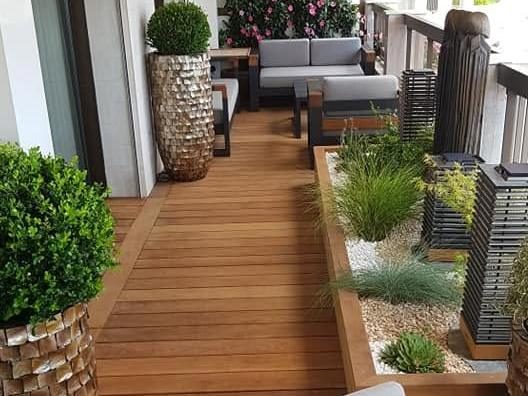
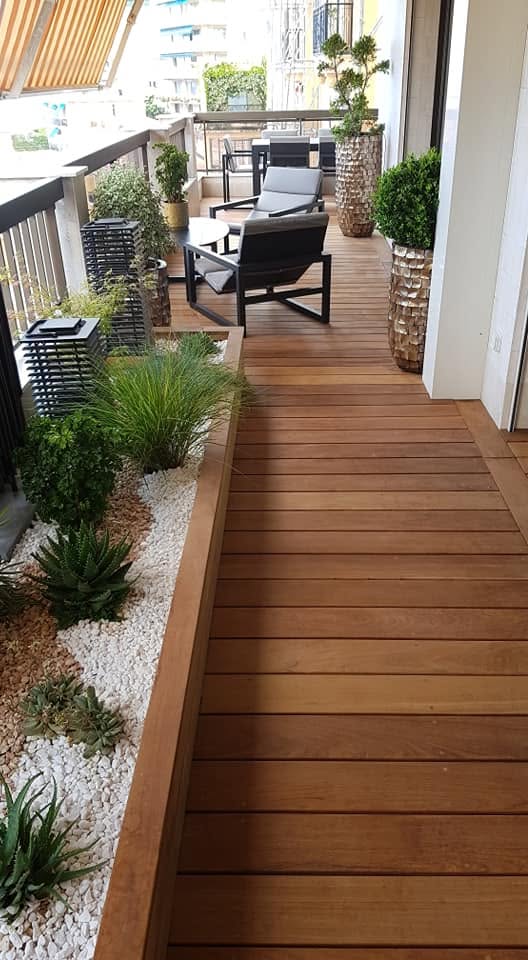
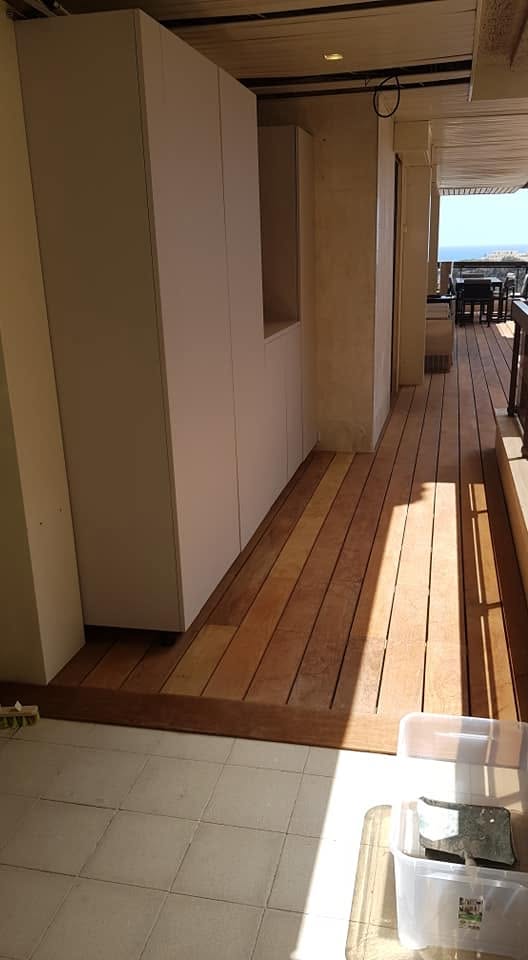
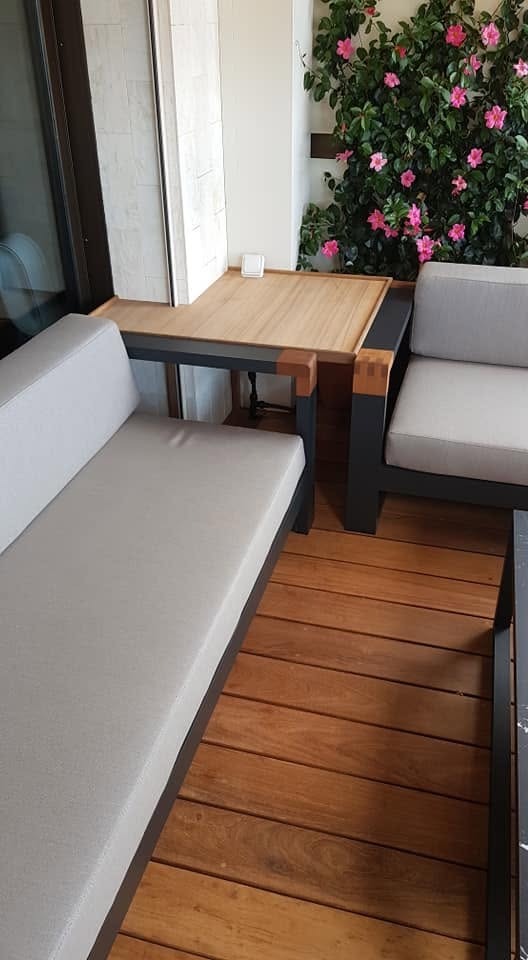
Continuous solid teak decking laid across the terraces of a private apartment in Monaco, where outdoor space is scarce and every square metre is expected to feel like an extension of the interior. The teak runs as a single, unbroken surface across the terraces, with built-in planter borders, considered changes of level and clean interfaces where the deck meets the interior flooring.

The detail that defines a project like this is the transition. A terrace deck that reads as part of the apartment has to meet the inside floor at a controlled level, hold a crisp line against thresholds and glazing, and frame the planters without visible compromise — the joints and margins carry the whole impression. Fabrication and fitting were carried out on site to suit the exact geometry of the terraces rather than a standard module.

The deck was handed over ready for planting and furniture, a finished surface waiting only to be lived on. The result is private outdoor space with the material warmth of solid teak, detailed to residential expectations and built to be sanded and maintained rather than replaced as it ages in the Mediterranean climate.

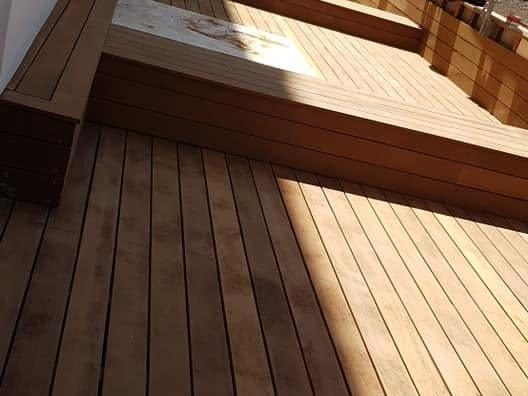
Residential · Terrace sanding

Terrace deck sanding & restoration

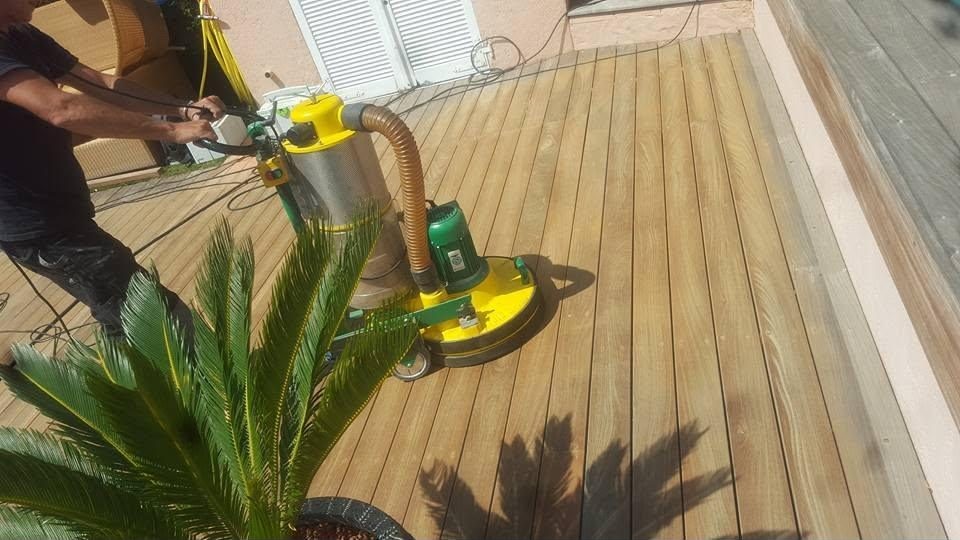
Teak that has been left to weather turns silver-grey as the surface fibres oxidise — but beneath that grey layer the timber is very often completely sound. This project shows exactly that: the controlled machine sanding of a weathered exterior teak terrace, taking off only the degraded surface to reveal the honey-coloured wood underneath.

The work was done with calibrated machine sanding and dust extraction rather than aggressive stripping or chemical cleaners, which flatten the grain and shorten the life of the deck. Removing the minimum necessary is the whole discipline of restoration: enough to clear the grey and even the surface, no more, so the planks keep their thickness and can be sanded again years from now. The extraction keeps the dust off the terrace and out of the surrounding space during the work.

The photograph makes the difference plain — the freshly sanded area set directly against the untreated grey deck. What looked like a terrace due for replacement is returned to sound, warm teak in a single controlled pass, at a fraction of the cost and disruption of relaying it. Restoration first, replacement only when the timber genuinely calls for it.

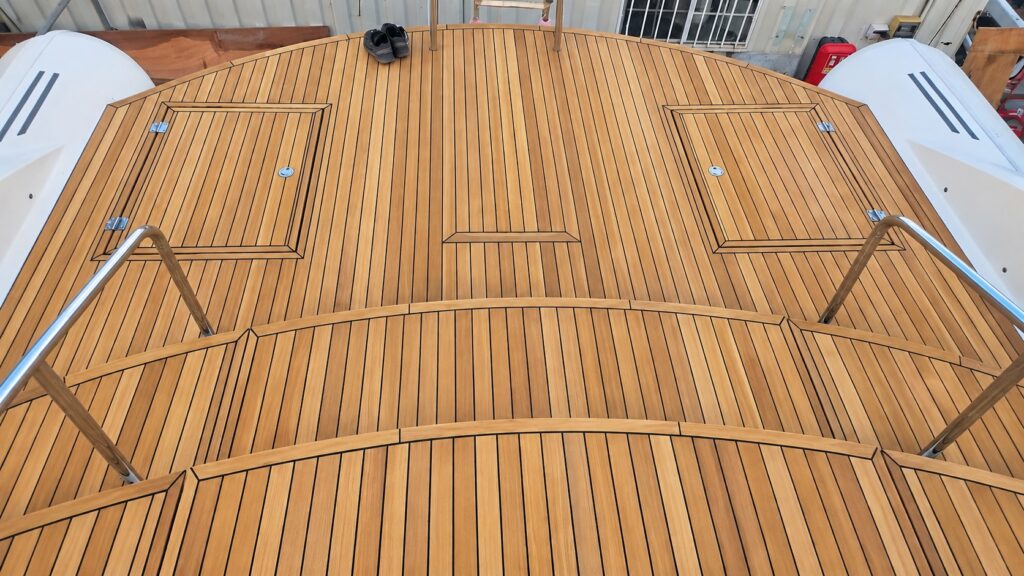
Complete caulking renewal
Renovation · Sailing yacht

Complete caulking renewal

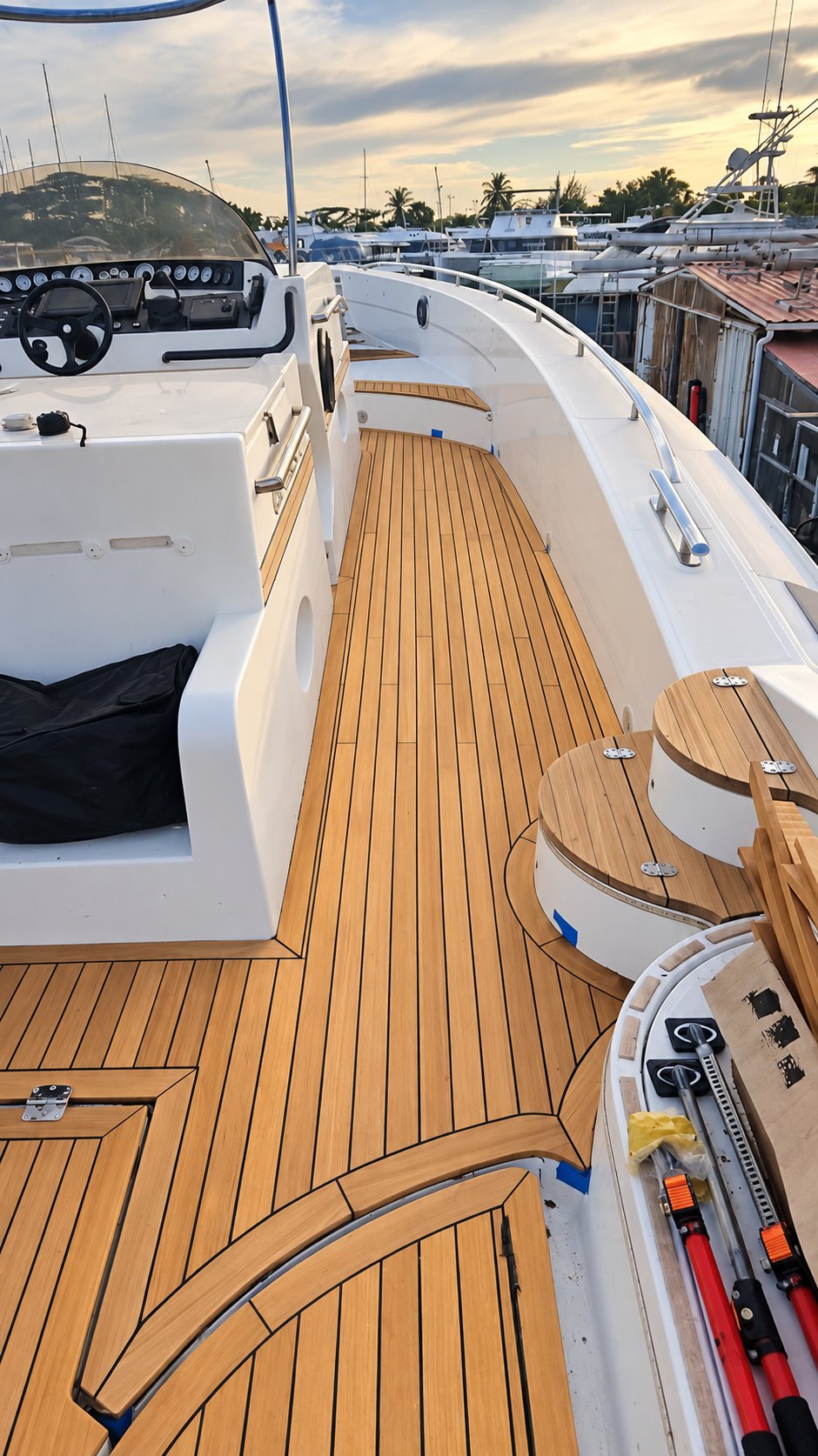
Every caulking seam across the entire deck renewed in a single programme — a complete recaulk rather than a repair of the worst runs. When enough of a deck’s seams have failed, renewing them piecemeal only leaves the next failure a season away; taking the whole deck at once returns it to a known, uniform condition with every joint the same age.

The existing caulk was removed seam by seam and the plank edges cleaned back to a sound profile, so the new compound could bond to bare timber rather than to the remains of the old seam. Every seam was then recharged across the full field of the deck, left to cure, and trimmed proud before the deck was taken down to a final sanding.

That last stage is what makes a recaulk disappear: trimming and sanding bring the new black seams flush with the surrounding planks, so the deck reads as continuous teak rather than a grid of fresh repairs. The outcome is a fully watertight deck with a clean, even surface — the original planking preserved, and the caulking reset to zero across every seam at once.

Vacuum-bonded installation
Technique · Vacuum bonding

Vacuum-bonded installation

Prefabricated teak panels bonded to the substrate under vacuum, a method that produces a deck with uniform adhesion across its whole area and no visible fastenings anywhere in the surface. The panels are built up and laid out in the workshop, then bonded down in a single controlled operation.

Vacuum bonding matters because it removes the two classic weaknesses of an older laid deck. There are no screws, so there are no fastener heads to plug, no plugs to work loose and weep, and no drilled penetrations reaching down toward the structure. And because the whole panel is pressed evenly onto a full bed of adhesive while it cures, the bond is consistent rather than tight in some places and starved in others — which is what later lifts a seam or a plank edge.

The finished deck is thinner, lighter and cleaner than a mechanically fixed equivalent, with an unbroken teak surface and seams that hold because the timber beneath them is fully supported. It is the modern standard for a new deck, and the approach we prefer wherever the substrate allows it.

Full deck prefabricated
Workshop · Prefabrication

Full deck prefabricated

A complete deck laid out, jointed and assembled in our workshop before it ever reached the vessel — plank layout, margins, kingplank and seams all resolved on the bench, then installed on board as a finished unit. Prefabrication is how a deck of any complexity is built to fit precisely while keeping time on the boat to a minimum.

Working in the workshop means the plank runs can be set out against the exact template of the deck, the curves and margins trued, and the caulking done in controlled conditions rather than in the open on a busy quay. Every joint is checked before anything is committed to the boat. When the deck goes on board it is a known quantity, which is what keeps the on-site phase short and predictable — often the deciding factor when a yacht is working to a refit window.

The result is a deck fitted to the millimetre with the finish quality of bench work, installed with the minimum of disruption on board. Precision and photography aside, the real advantage is time: the vessel is out of use for days rather than weeks.

Bespoke · Companionway

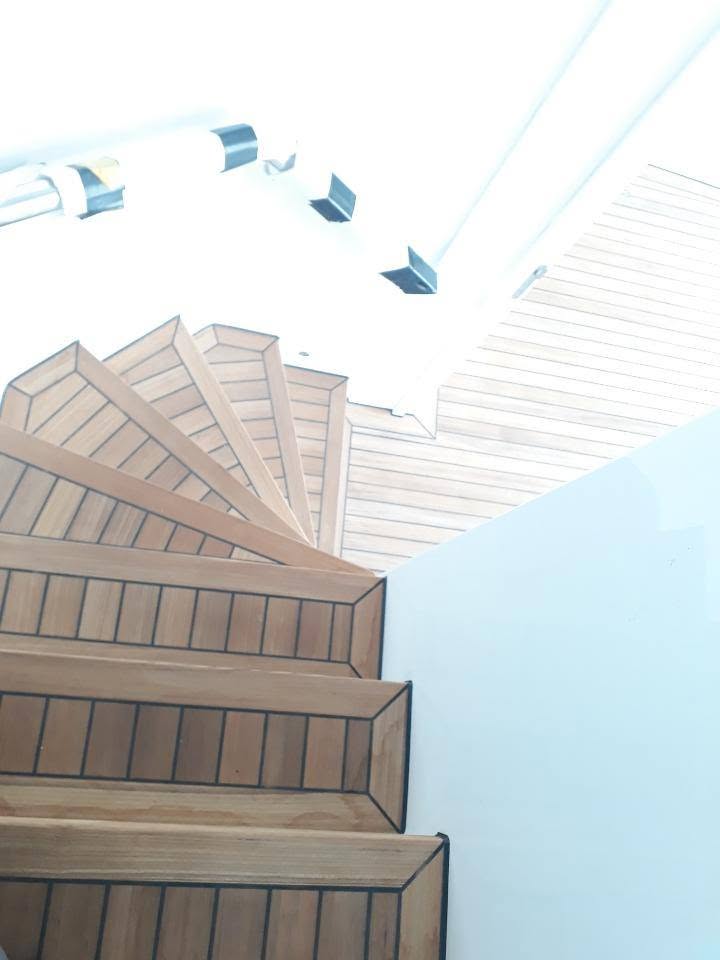
Spiral teak companionway

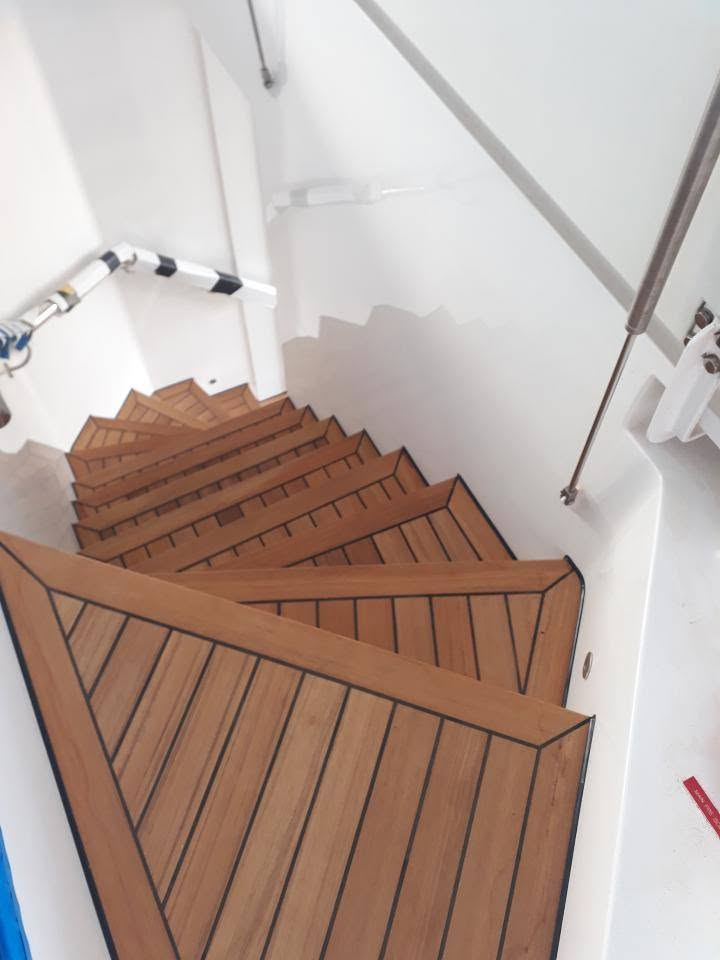
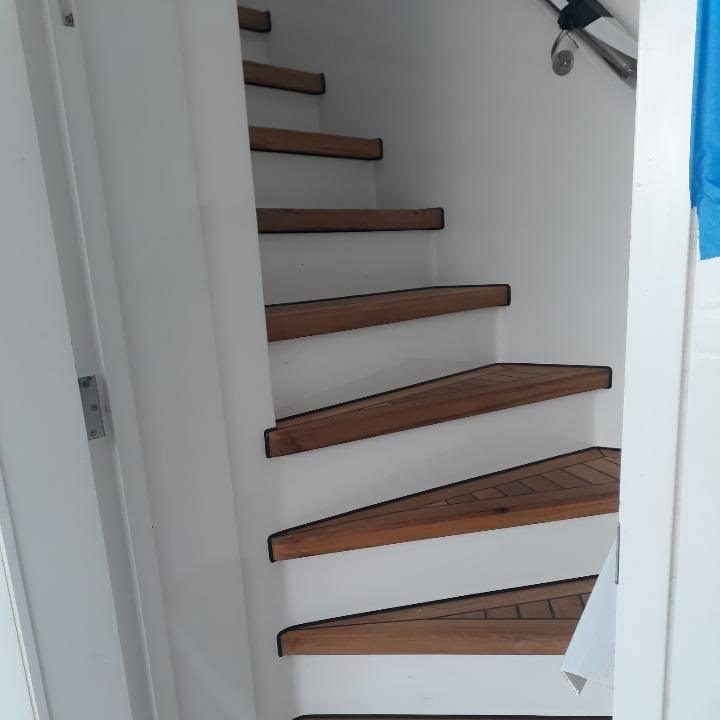
A curved companionway with radiating teak treads, fitted between decks against the white gelcoat — a stair that is as much a piece of joinery as a deck. Each tread is laid in teak with caulked seams and framed by dark margins, so the steps read as a set of matched, individual pieces following the sweep of the stair.

The difficulty in a companionway like this is that nothing is straight. The treads radiate, the plank runs fan out across each step, and the margins have to hold a clean, even line around curves while the whole assembly meets the surrounding gelcoat without a ragged edge. That is resolved on the bench, where each tread can be laid, caulked and trimmed accurately before installation, rather than fought in place.

Workshop-fabricated and installed on board, the finished companionway turns a functional link between decks into a detail that carries the same craftsmanship as the main deck. The radiating treads and dark margins give the stair depth and rhythm; the caulked seams and clean gelcoat interfaces are what make it look built-in rather than added.

Bespoke · Deck furniture

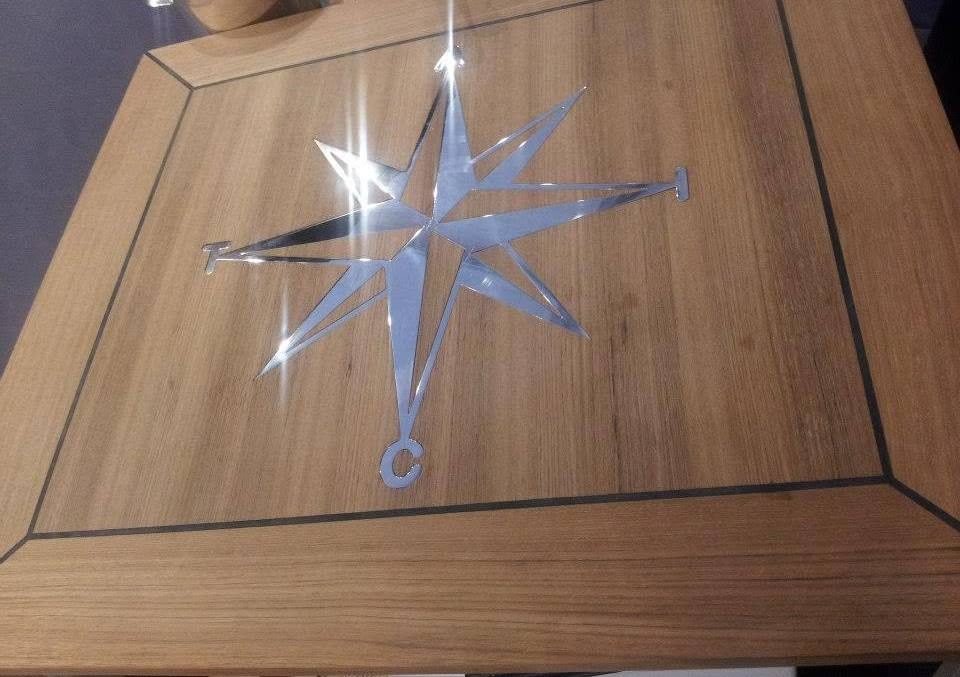
Cockpit table with compass rose inlay

A solid teak cockpit table with a polished stainless steel compass rose inlaid flush into its surface — a working piece of deck furniture that doubles as the centrepiece of the cockpit. The top is framed by a mitred border and articulated with caulked feature lines, the same visual language as the deck it sits on.

An inlay like this is an exercise in precision. The stainless compass rose has to be let into the teak so that its face sits perfectly flush with the surrounding timber, with a clean, continuous line all the way around a complex multi-pointed shape — any gap or step at that junction is immediately visible and impossible to hide. The mitred border and caulked feature lines are set out to frame the rose and keep the whole top symmetrical.

Workshop-fabricated and finished, the table pairs the warmth of solid teak with the crispness of polished stainless, and ties itself to the yacht through the compass motif. It is the kind of bespoke piece that turns a standard cockpit into something specific to one boat — practical furniture executed to the standard of fine joinery.

Delivered · Motor yacht

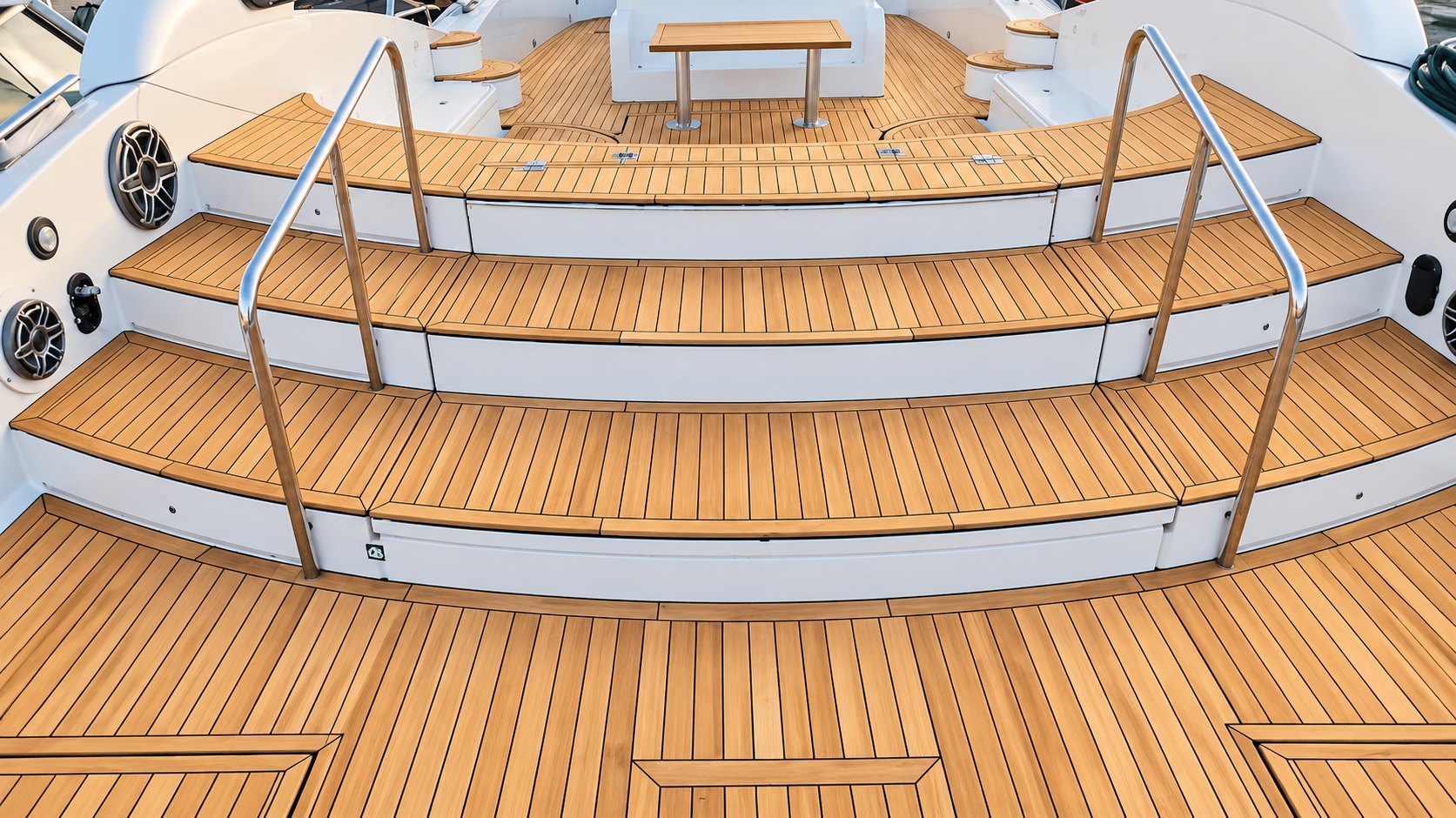
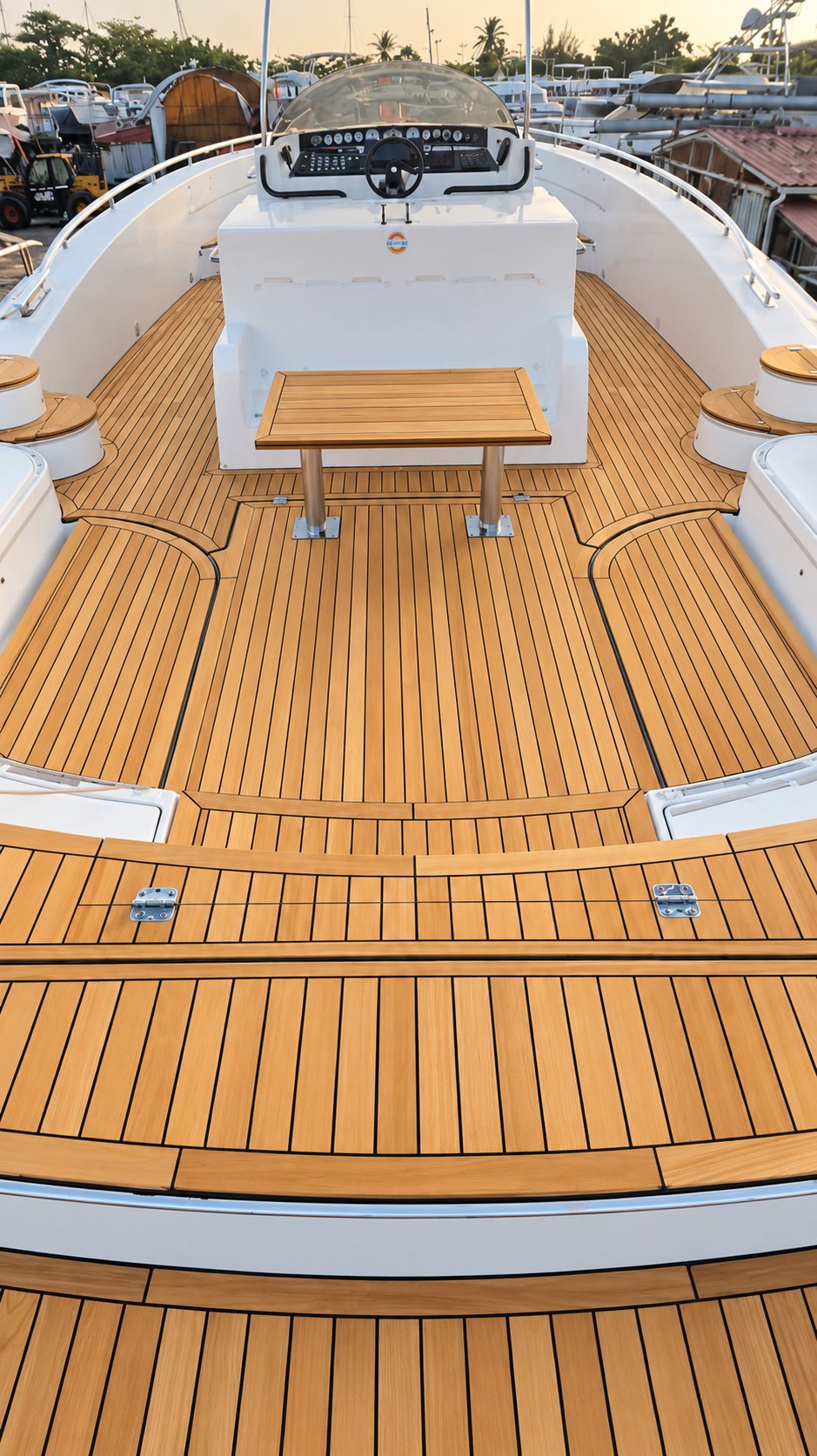
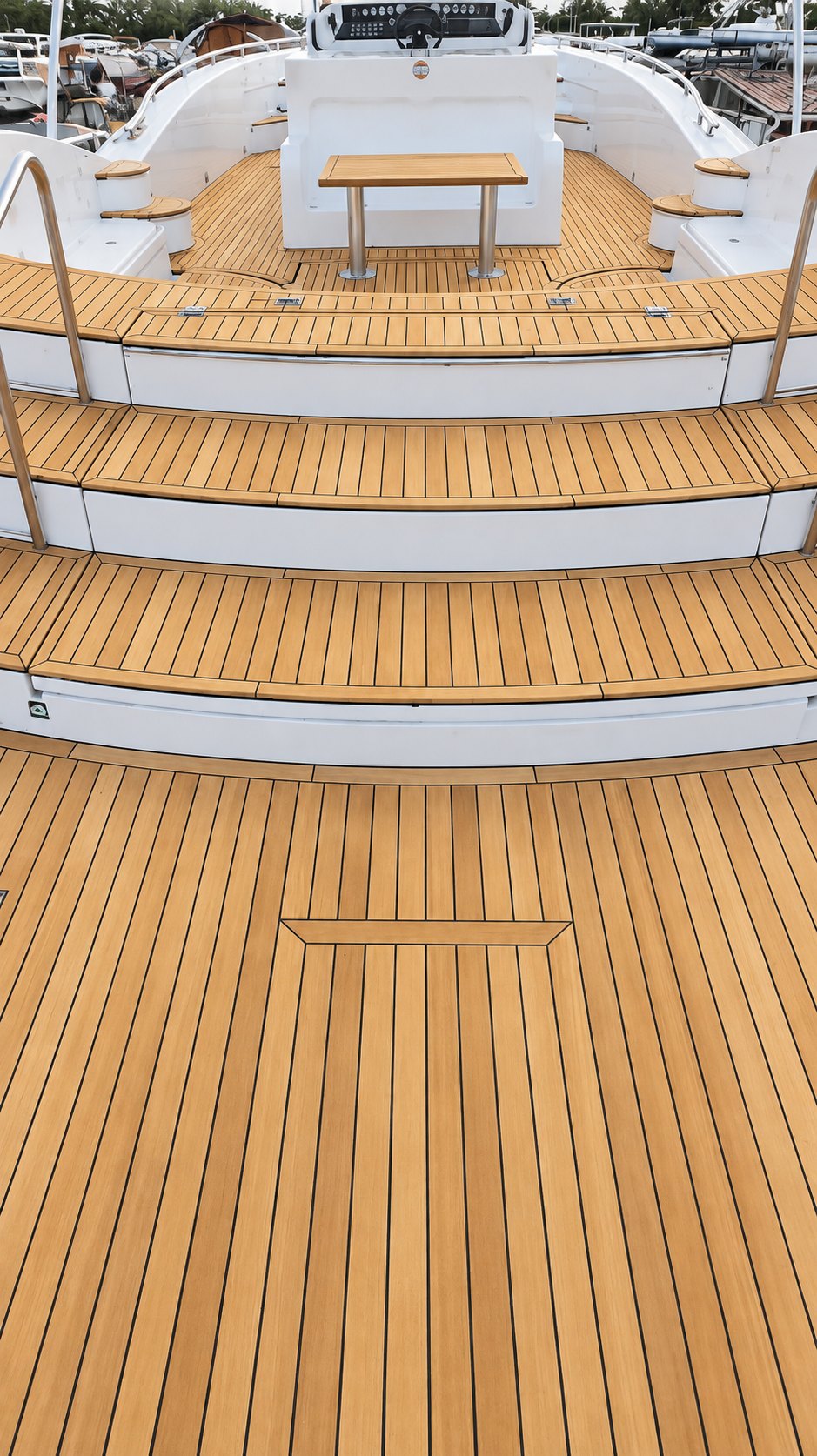
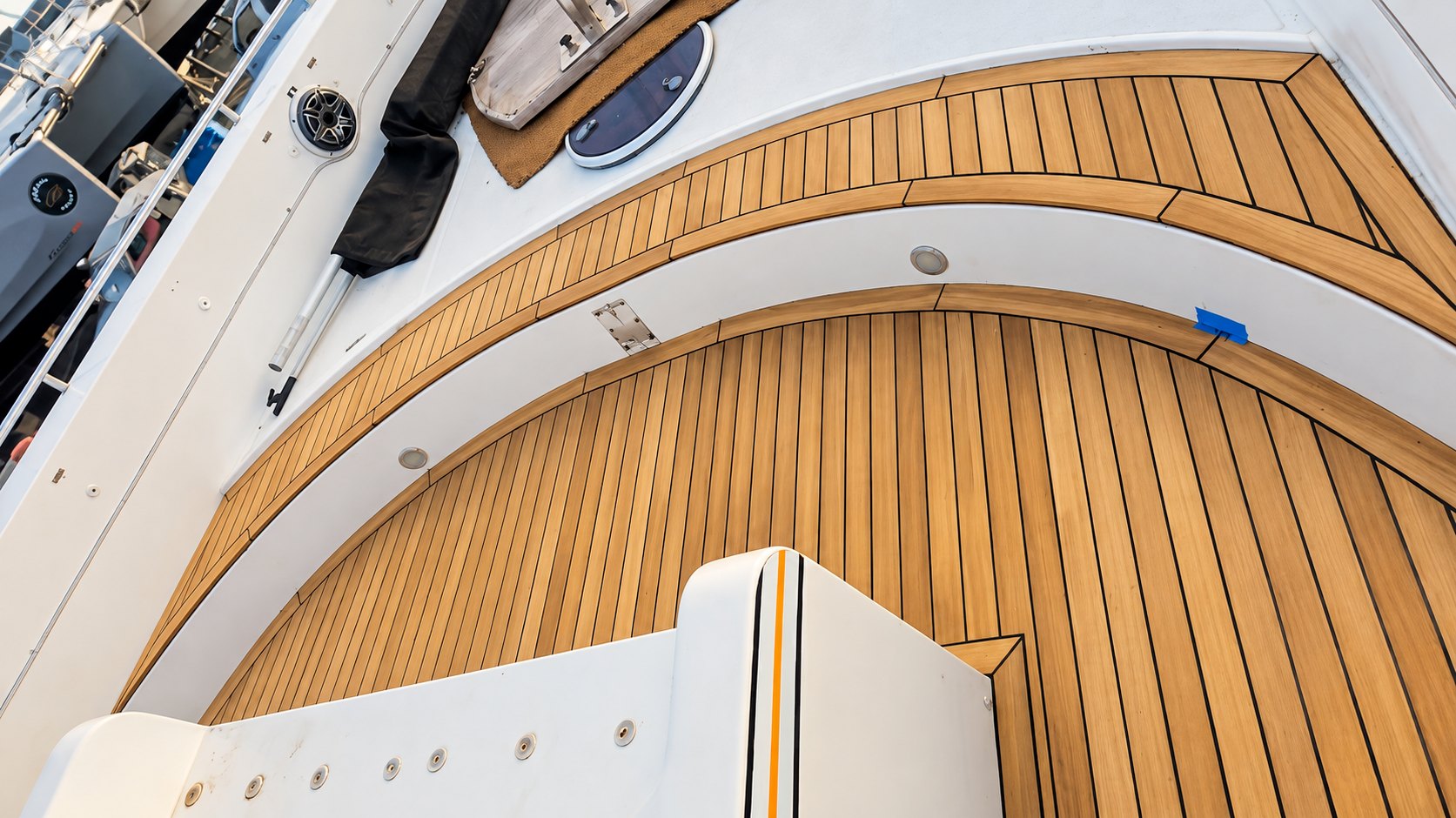
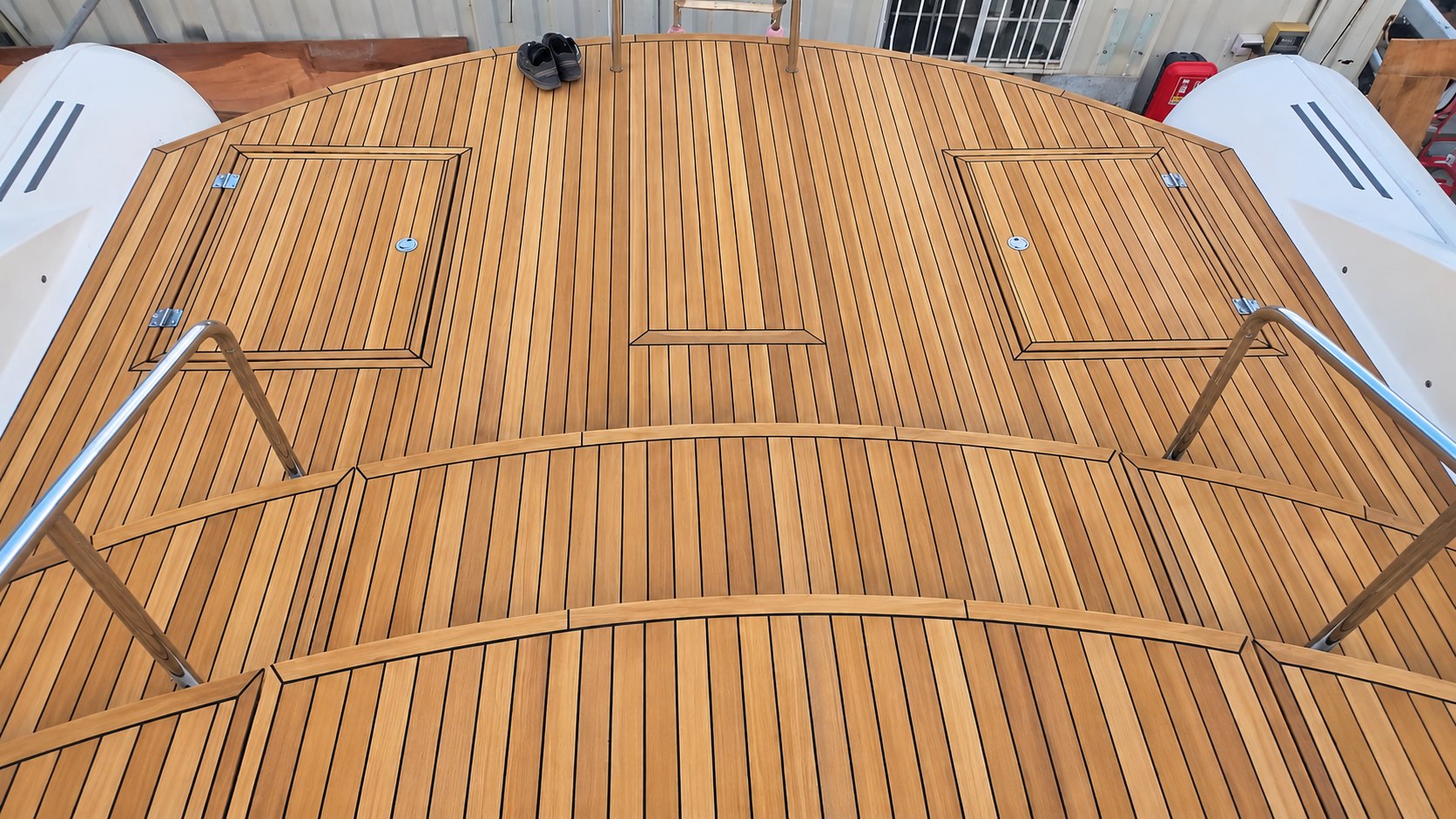
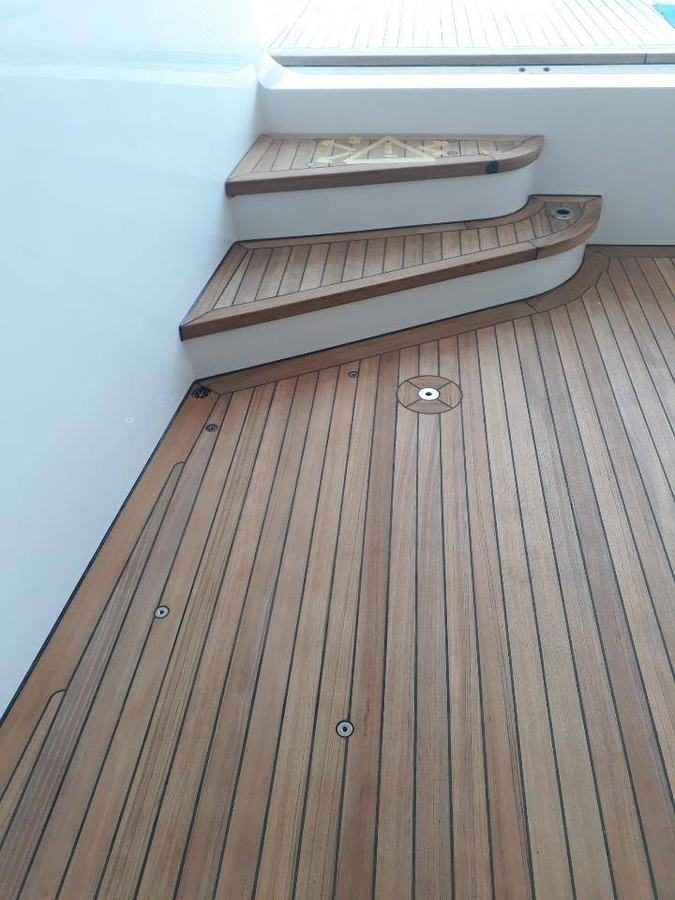
Aft deck & curved steps

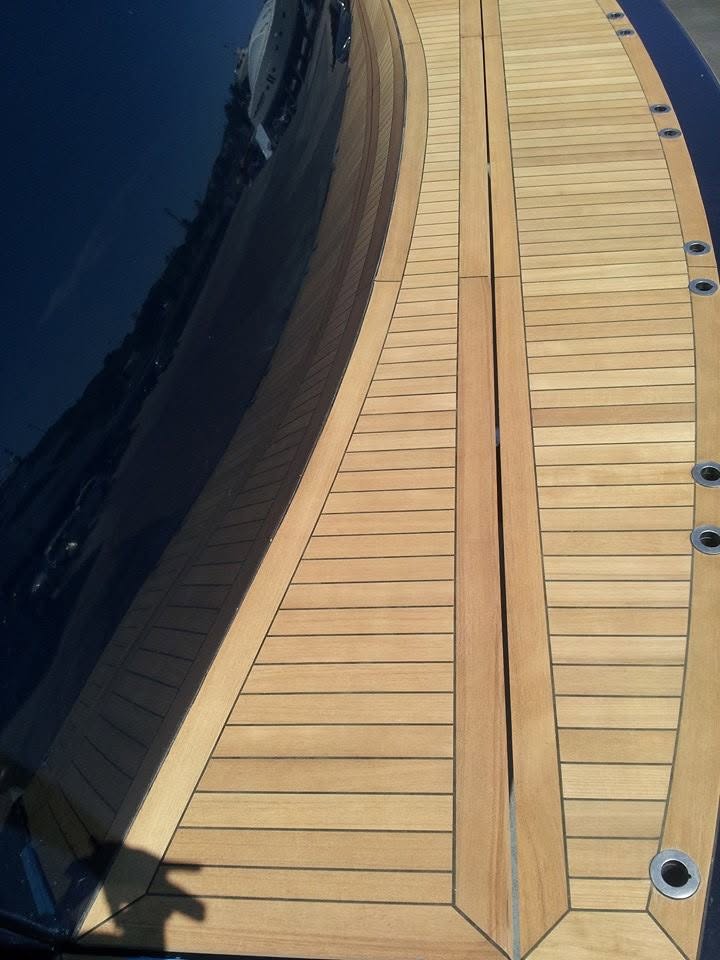
Curved aft steps and an aft deck in a natural sanded finish, with continuous margins carried cleanly around the superstructure. The aft deck is where a yacht is most often seen and used, and where the plank layout has to negotiate the most curves — around the transom, the steps and the base of the superstructure at once.

The craft in a deck like this is in the margins. A single, unbroken border line that follows the deck edge and sweeps around every change of direction is what gives the surface its calm, resolved look; a margin that wanders or breaks at a curve is the first thing the eye catches. Setting out the plank runs so they meet those curved margins evenly, and carrying the steps down in the same language, is what ties the whole aft area together.

Finished by sanding rather than varnish, the deck keeps the soft, matt, grippy surface that suits a working aft deck and greys gracefully if left natural. The result is an aft deck and steps that read as one continuous piece of teak, curved margins and all.

Deck around curved seating
Delivered · Cockpit

Deck around curved seating

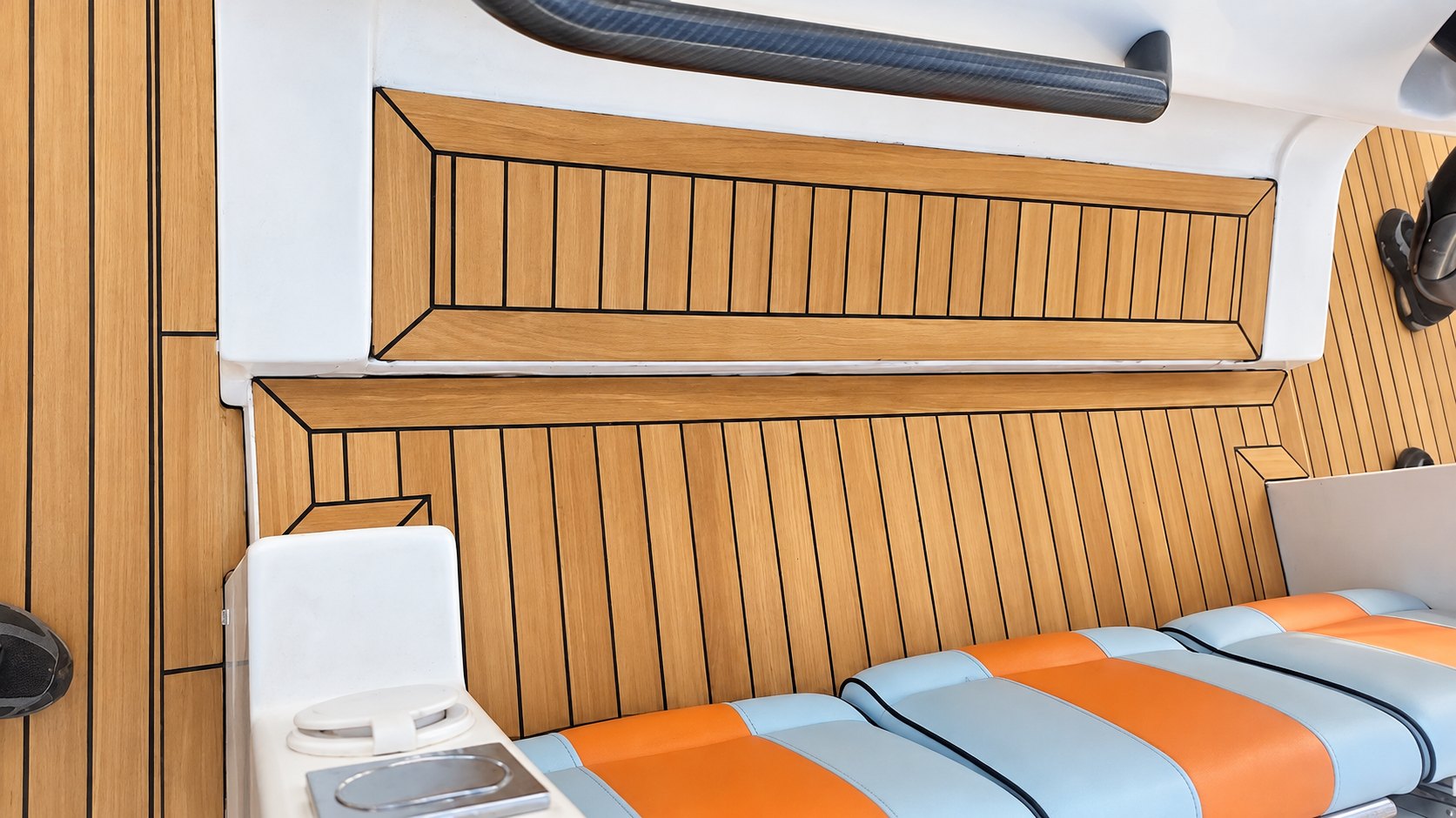
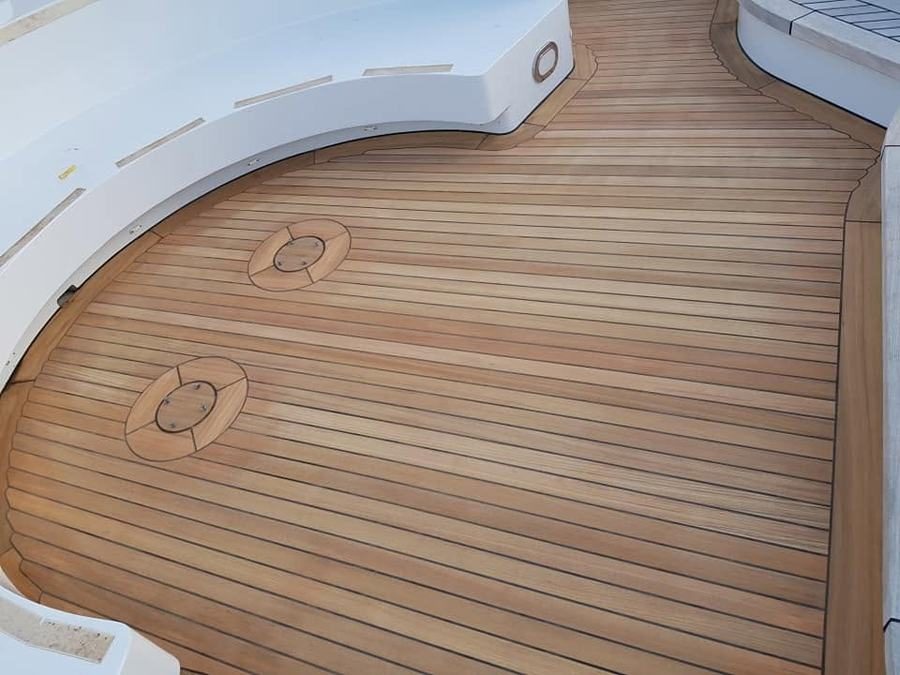
A deck laid around a curved cockpit bench, with the plank runs swept to follow the seating and the fittings and mooring rings integrated flush into the teak. Rather than run straight planks up to a curved feature and cut them off, the layout follows the curve, so the timber flows with the shape of the cockpit.

A swept layout is more demanding than a straight one at every stage. The planks have to be set out on radiating lines that stay parallel to the bench, the margins around the seating held even through the curve, and every deck fitting — rings, sockets, drains — let in so that its top sits flush with the surface and the plank work closes neatly around it. Each of those flush details is a small joinery problem solved so that nothing stands proud to catch a line or an eye.

The finished deck wraps the seating in continuous teak, with fittings that disappear into the surface and margins that hold their line around the curve. It is the kind of layout that looks effortless precisely because the geometry underneath it was anything but.

Deck and curved stairway
Delivered · Guest stairway

Deck and curved stairway

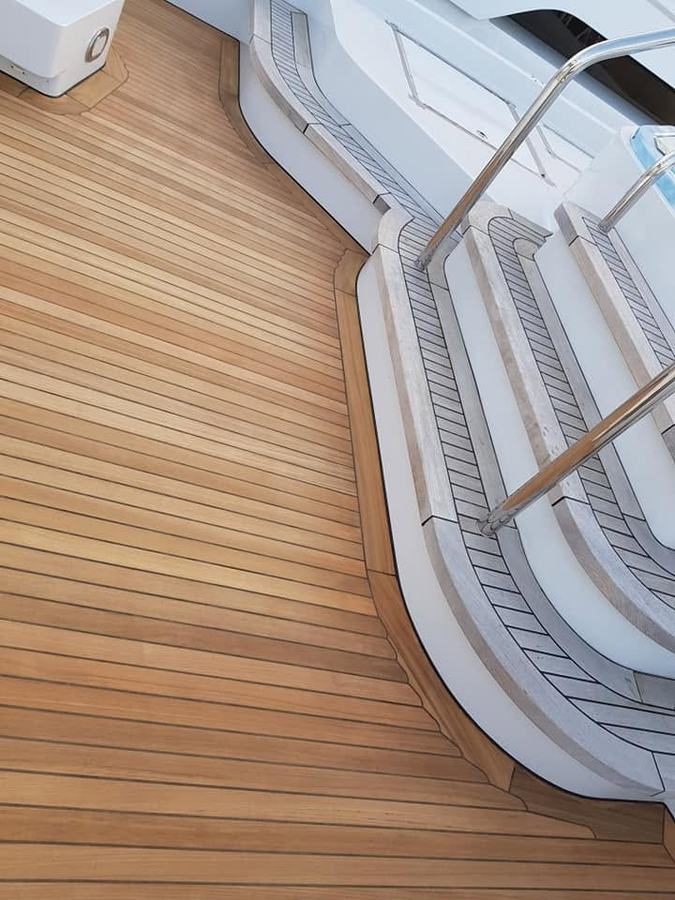
A main deck and a curved guest stairway laid in teak, with clean margins held against the gelcoat throughout. The stairway is the difficult element: a flight that curves as it descends, where every tread and riser has to be laid in teak and tied back into the run of the main deck without a break in the visual language.

Carrying a deck onto a curved stair means resolving two geometries at once — the flat plane of the deck and the three-dimensional sweep of the steps — while keeping the margins continuous across both. The line where teak meets gelcoat is where that work shows: it has to stay crisp and even along the deck, down the curve of the stair and around every tread, with no wavering and no ragged closes. That is what separates a fitted deck from a laid one.

The finished result reads as a single continuous surface that flows from the main deck down the guest stairway, margins clean against the gelcoat the whole way. Practical circulation on board, executed with the precision of cabinetwork.

Delivered · Sundeck spa

Spa surround & curved gratings

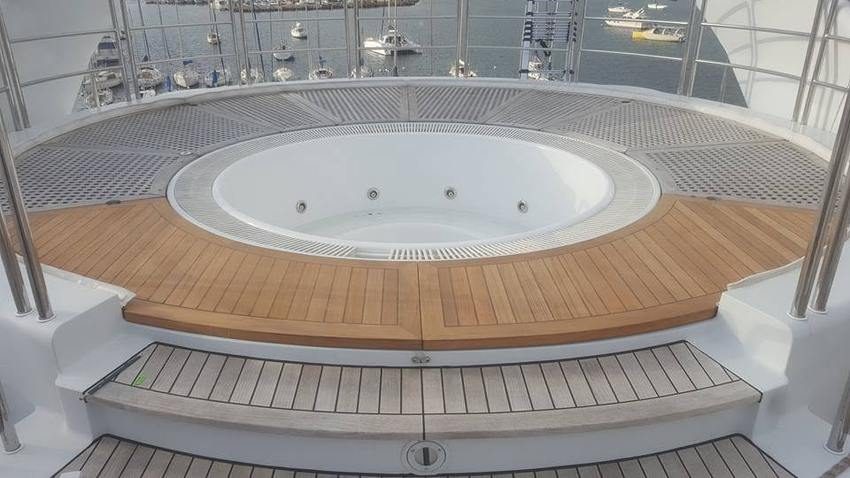
A circular teak surround and curved gratings around the spa pool on a sundeck — a wet, high-traffic, highly visible area where teak has to be both beautiful and genuinely functional underfoot. The surround frames the pool in solid teak; the curved gratings sit over the drainage margin, letting water fall away while giving a level, comfortable, non-slip surface to stand on.

Curved gratings are among the more demanding pieces of marine joinery. Each grating has to follow the radius of the pool, with the slats set to a consistent gap and the frame trued to the curve, so that a run of separate gratings reads as one continuous ring. They also have to lift out cleanly for access to the drainage beneath — furniture-grade fit in a component that has to be practical and serviceable.

Workshop-fabricated and fitted on board, the finished surround and gratings turn the technical margin around a spa pool into a resolved, elegant detail. Teak was chosen here for exactly the reasons it suits a deck: warm and grippy wet or dry, and able to take constant sun and water and be maintained rather than replaced.

Bespoke · Passerelle

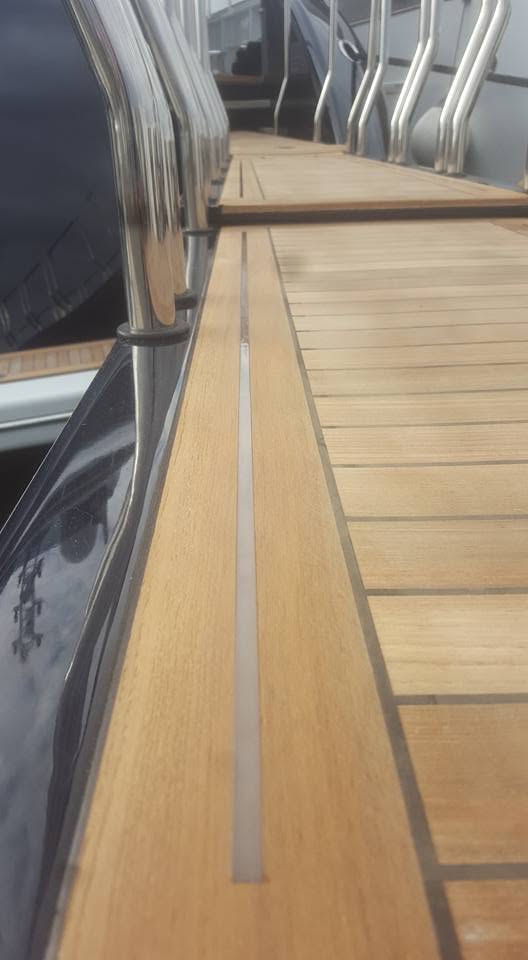
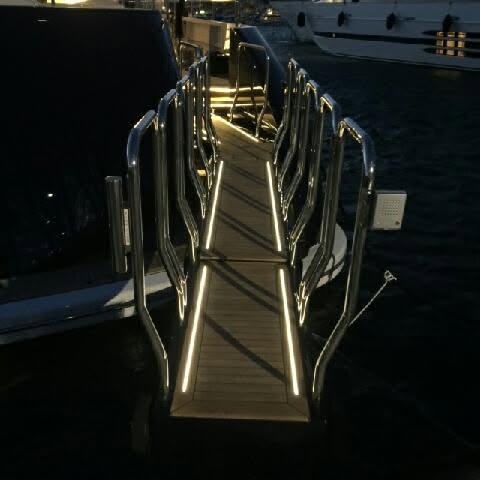
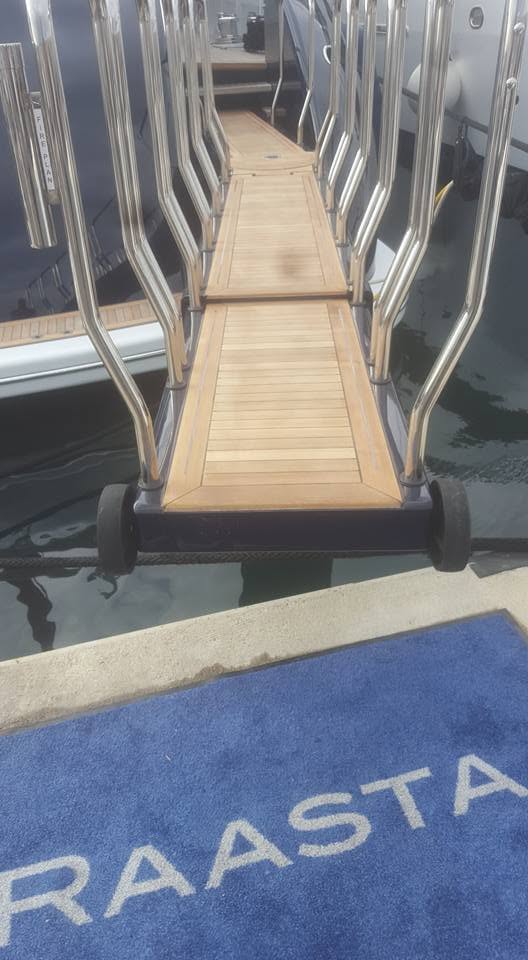
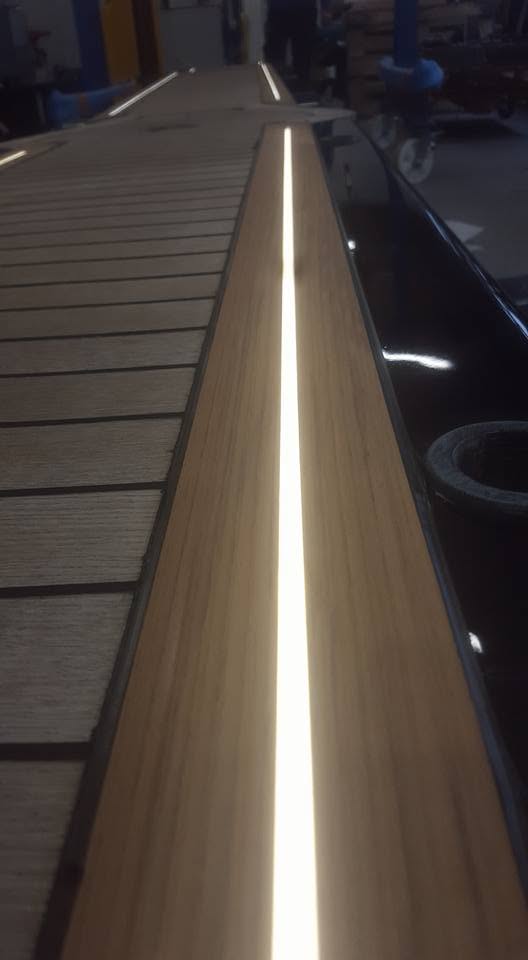
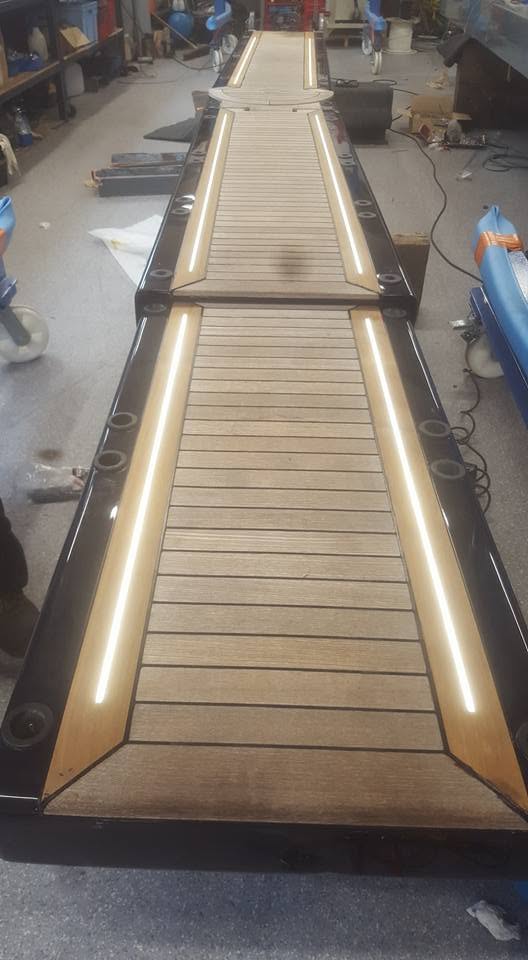
Teak & LED gangway

A lacquered passerelle with a teak walkway and integrated LED lighting — the gangway that is a guest’s first and last contact with the yacht, and a piece that is on show every time the boat is boarded. The structure is finished in lacquer, the walking surface laid in teak, and lighting built into the passerelle itself, shown here in service at night.

A passerelle carries competing demands. It has to be light and stiff enough to deploy and support guests, safe and sure underfoot in the wet and the dark, and finished to the standard of the yacht it serves. The teak walkway answers the grip and the warmth; the integrated LED lighting answers the safety, marking the walking line at night without add-on fittings; and the lacquered structure ties it to the vessel’s own finish. Each of those has to be resolved together, not bolted on afterwards.

Workshop-built as a complete unit, the finished passerelle is practical marine engineering executed as a bespoke fitting — the teak walkway and clean lighting turning a functional bridge to the quay into part of the arrival.

Bespoke · Boarding access

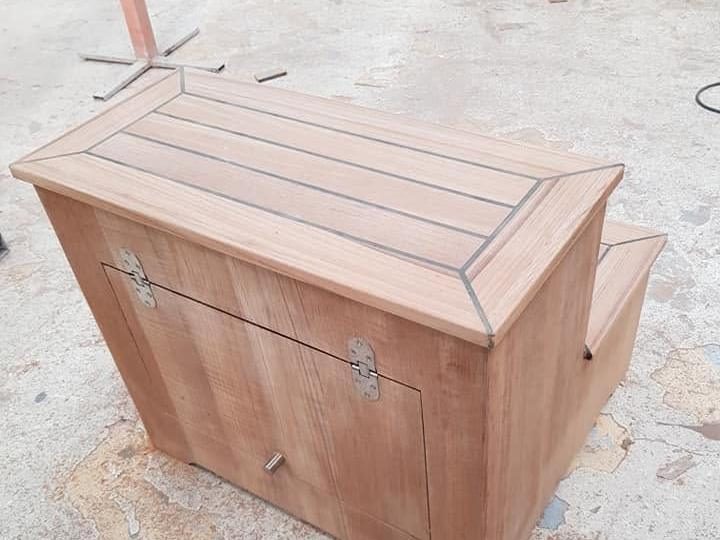
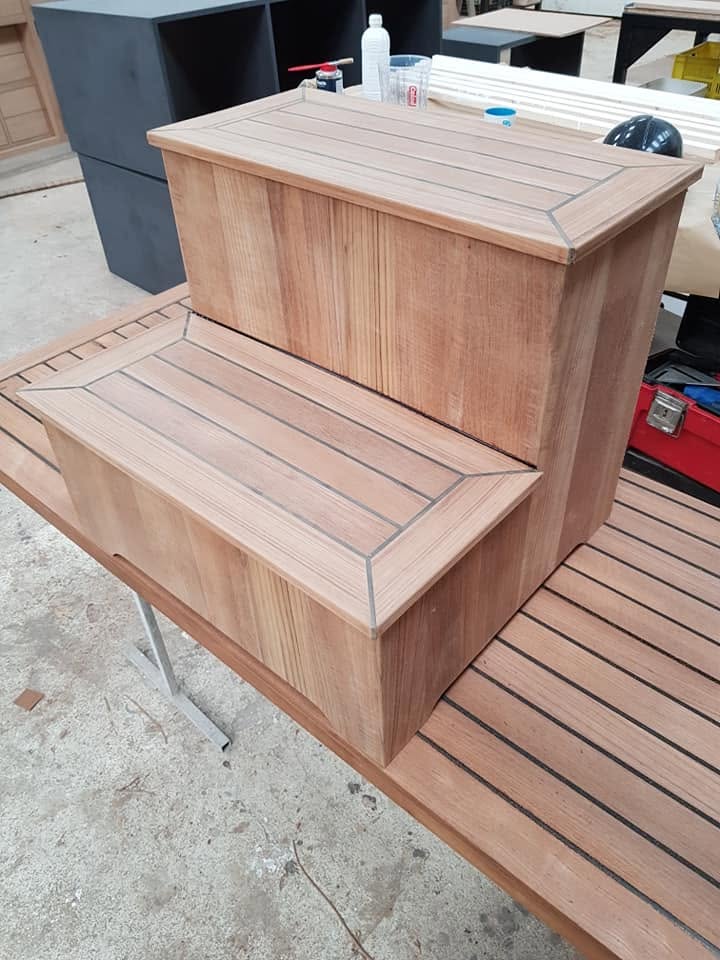
Custom teak boarding steps

Bespoke teak boarding steps for guest access, built to suit one vessel’s freeboard and boarding arrangement rather than adapted from a standard unit. The treads are laid in teak with caulked plank seams and mitred margins, and the steps carry an integrated storage compartment closed on stainless hinges — practical boarding access resolved as a finished piece of joinery.

Boarding steps have to answer the specific geometry of the boat: the height from the waterline or the quay, the width available, the angle that makes them safe and comfortable to use. Building them bespoke means the rise and going are set to suit the vessel exactly, so the steps feel natural underfoot rather than improvised. The caulked treads give grip and match the deck; the mitred margins frame each step cleanly; the stainless-hinged compartment turns the volume under the steps into usable stowage.

Workshop-fabricated to the vessel’s own dimensions, the finished steps combine safe, comfortable access with the finish quality of the deck itself — a functional necessity built to the same standard as the yacht’s furniture, and detailed so it looks original to the boat.

Fold-down balconies & platforms
Delivered · Side platforms

Fold-down balconies & platforms

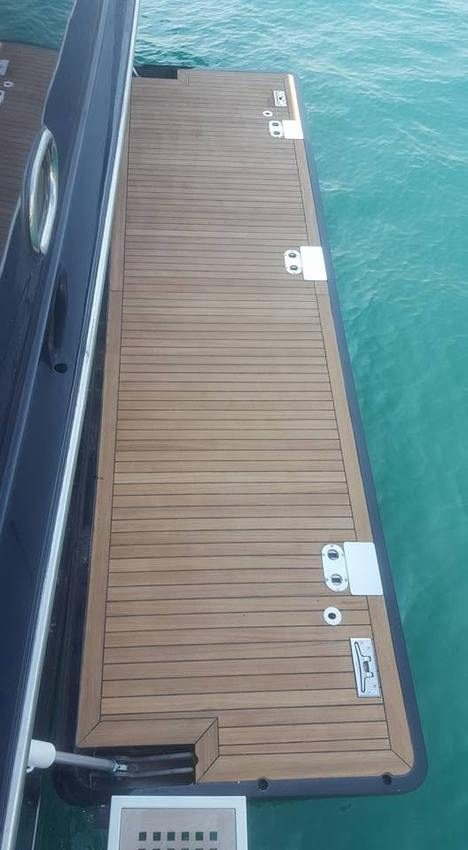
Teak-laid fold-down balconies and bathing platforms, with the margins fitted flush to follow the line of the hull. These are the moving parts of a modern yacht’s deck — sections that fold out to open the boat to the sea — and laying teak across them brings a particular set of demands.

Because the panels deploy and stow, the teak has to be laid so that the margins line up with the surrounding deck and the hull line when the platform is down, and close cleanly when it is up. The border has to follow the sheer of the hull rather than a straight edge, and every plank run has to account for the join where the moving section meets the fixed deck. Get it right and the balconies read as an unbroken continuation of the deck when open; get it wrong and the eye catches every misaligned margin.

The finished platforms give guests a warm teak surface right at the waterline, flush with the hull and continuous with the deck above. It is precise work on components that have to move, wear and stay watertight — teak detailed to disappear into the line of the boat.

Bespoke · Exterior furniture

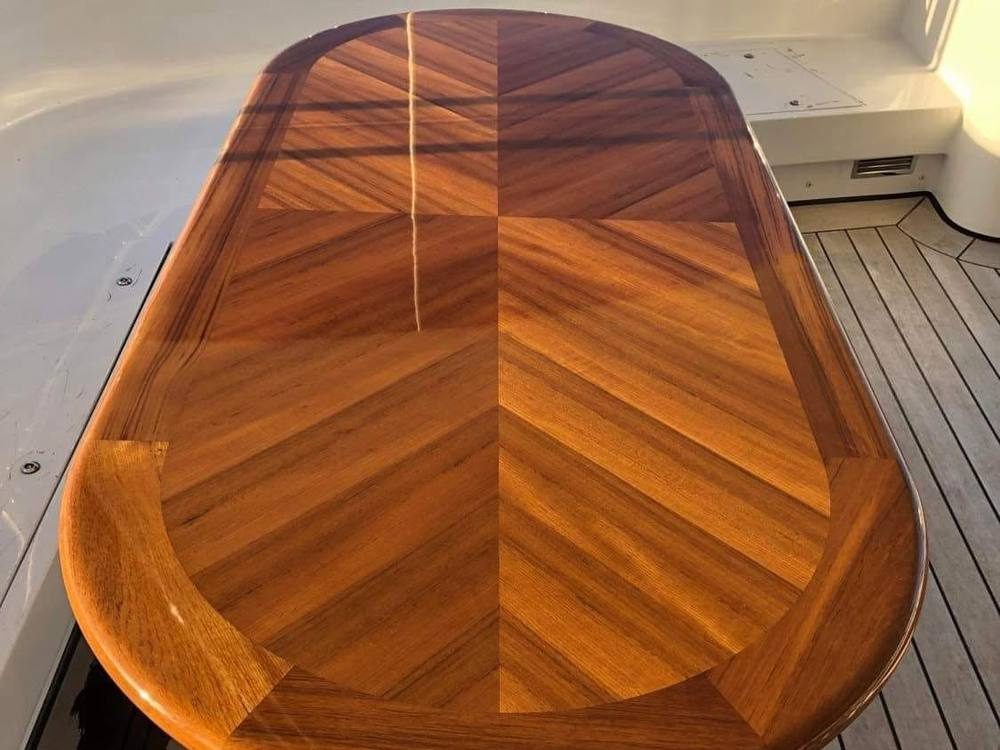
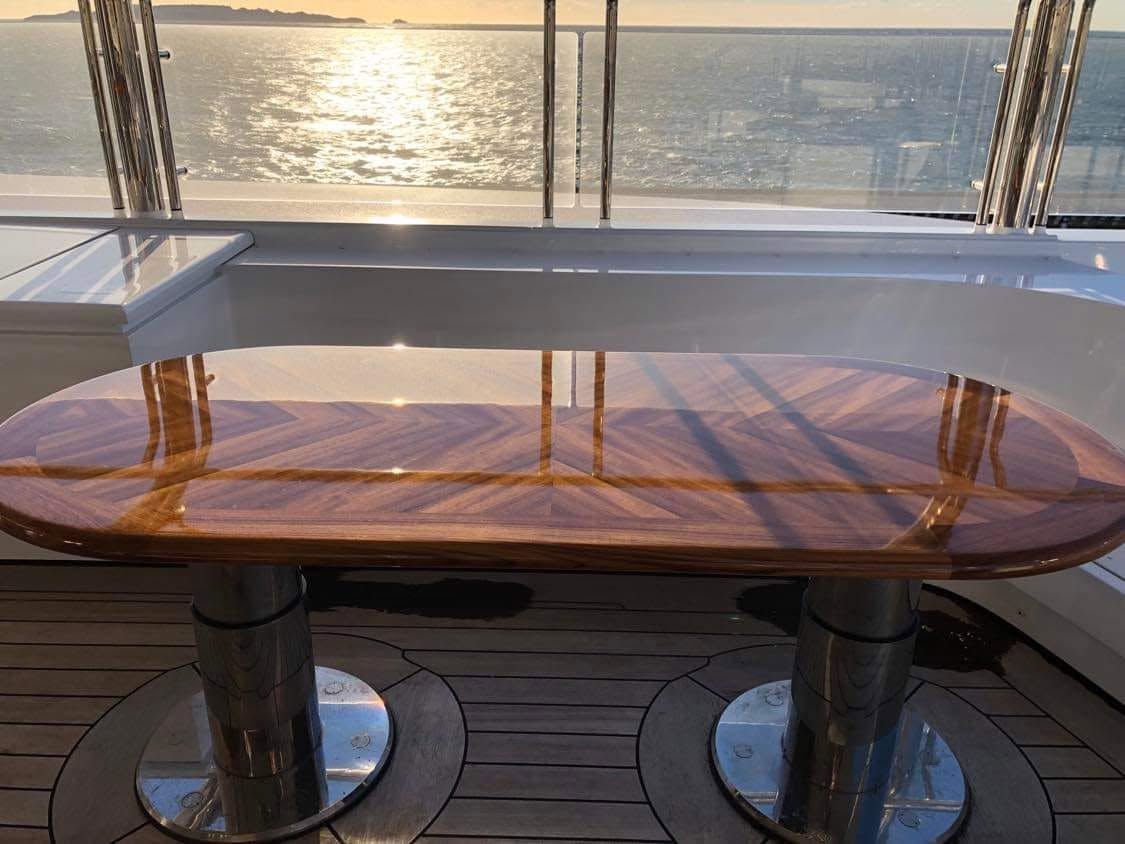
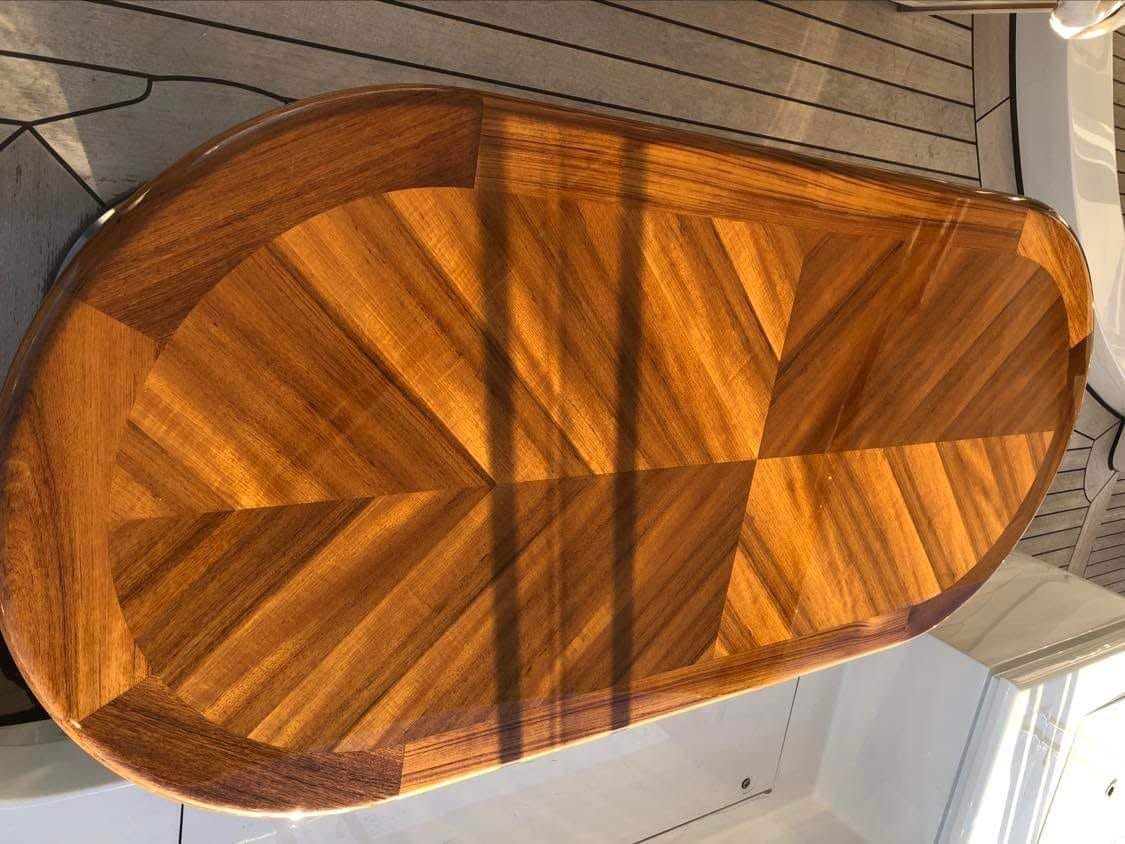
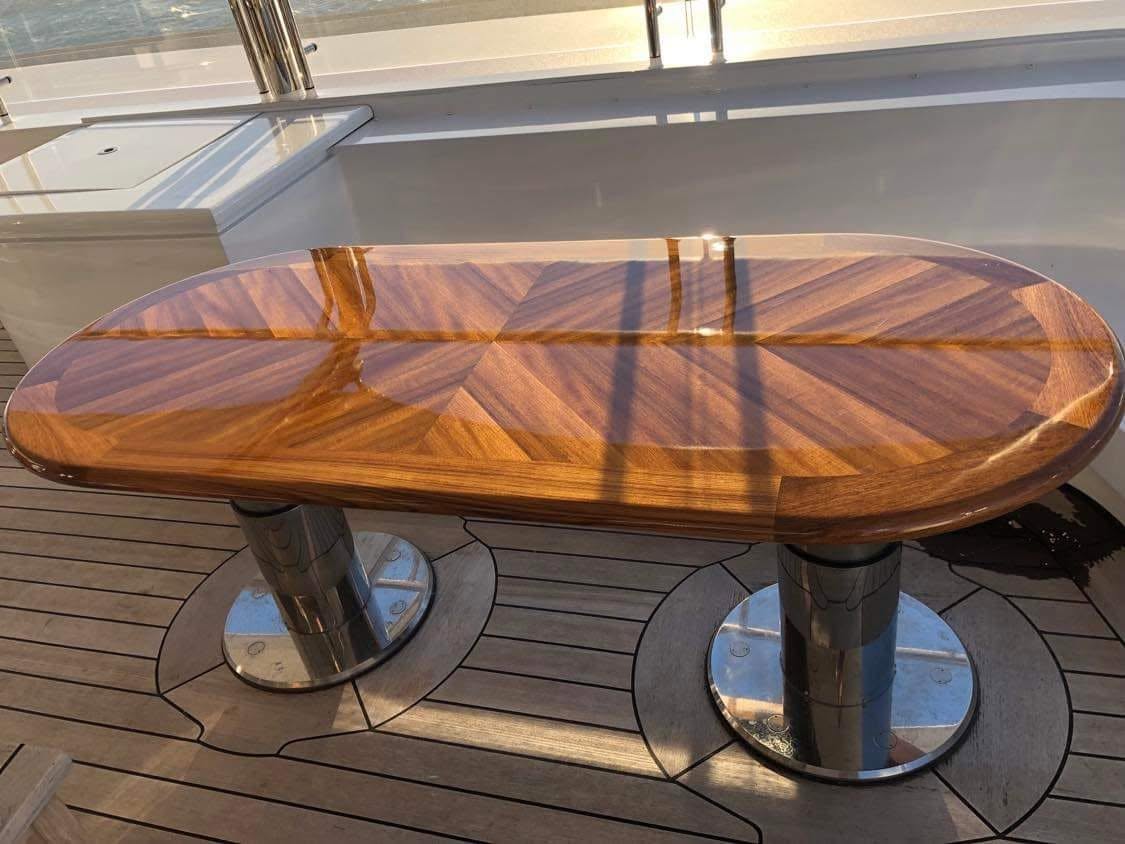
High-gloss chevron teak table

An oval exterior dining table in solid teak with a symmetrical chevron top, finished in multi-coat high-gloss varnish and mounted on twin polished stainless steel pedestals. This is furniture rather than decking — a statement piece for the deck, built and finished to cabinetmaking standards.

A chevron top is an exercise in symmetry. Each pair of staves has to mirror the other exactly across the centreline, the angles held consistent down the whole length of an oval that is constantly changing width, so that the pattern reads as one clean, balanced sweep. On top of that geometry sits the finish: a high-gloss varnish built up in multiple coats, each one flatted back before the next, to a deep, mirror-smooth surface that shows every imperfection beneath it — which is exactly why the joinery underneath has to be perfect first.

Workshop-fabricated and fitted on board on its twin stainless pedestals, the finished table pairs the warmth and figure of solid teak with a furniture-grade gloss and the crispness of polished steel. A bespoke exterior table made to anchor a deck’s social space and to be looked at closely.

Bespoke · Exterior furniture

Radial sunburst teak table

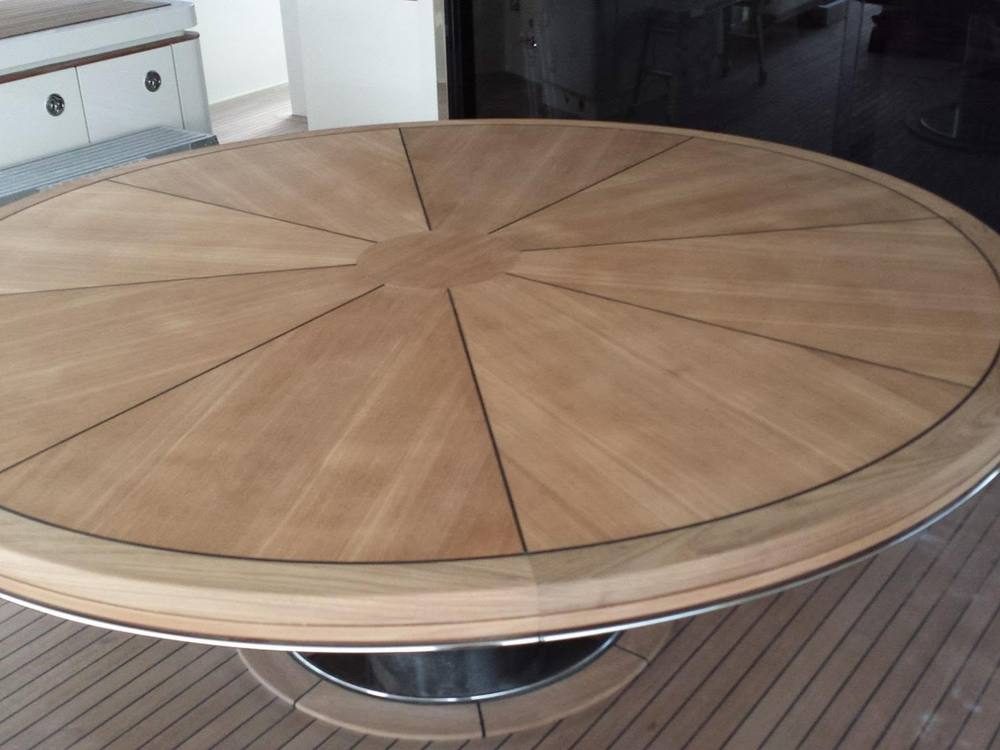
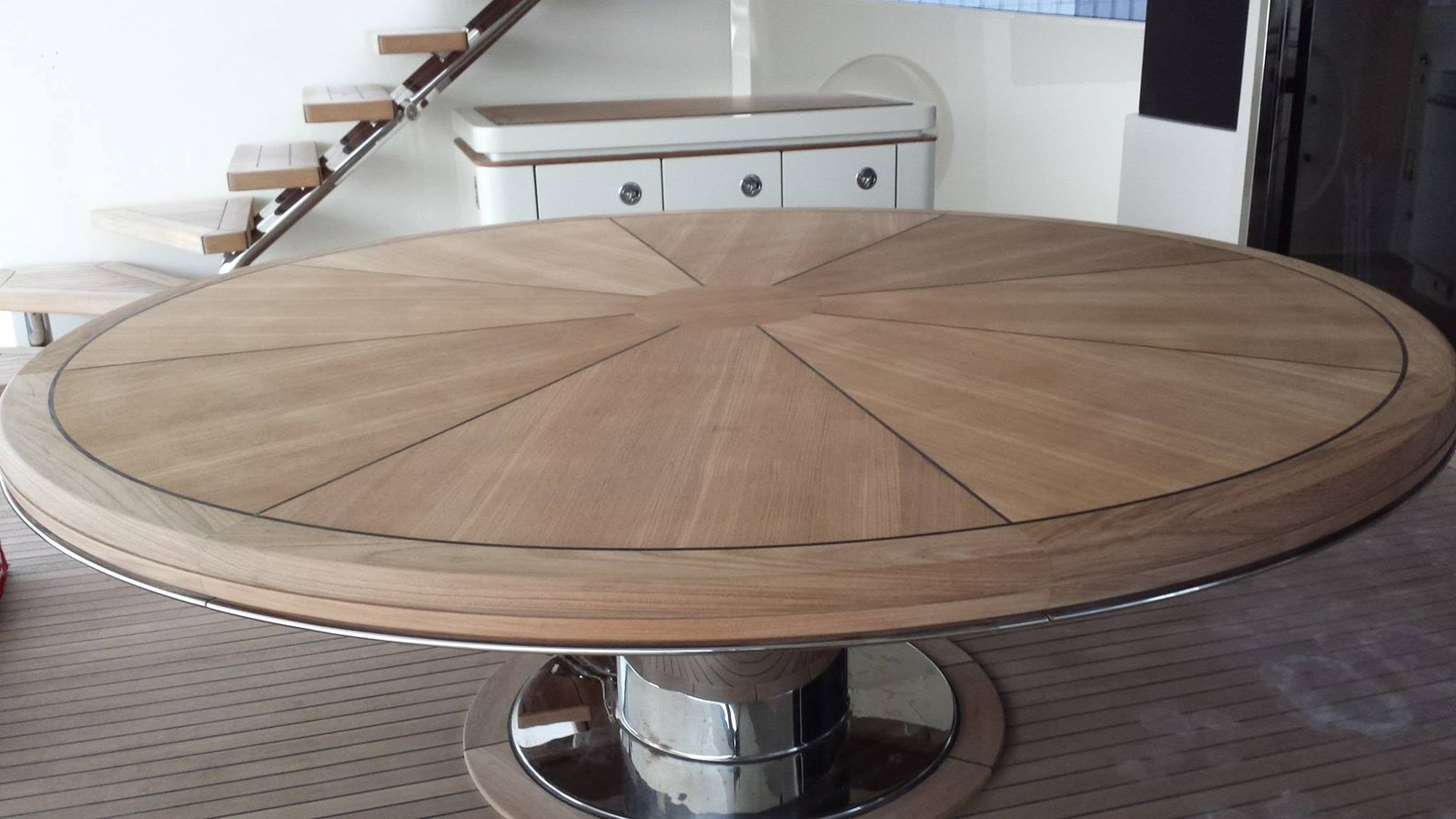
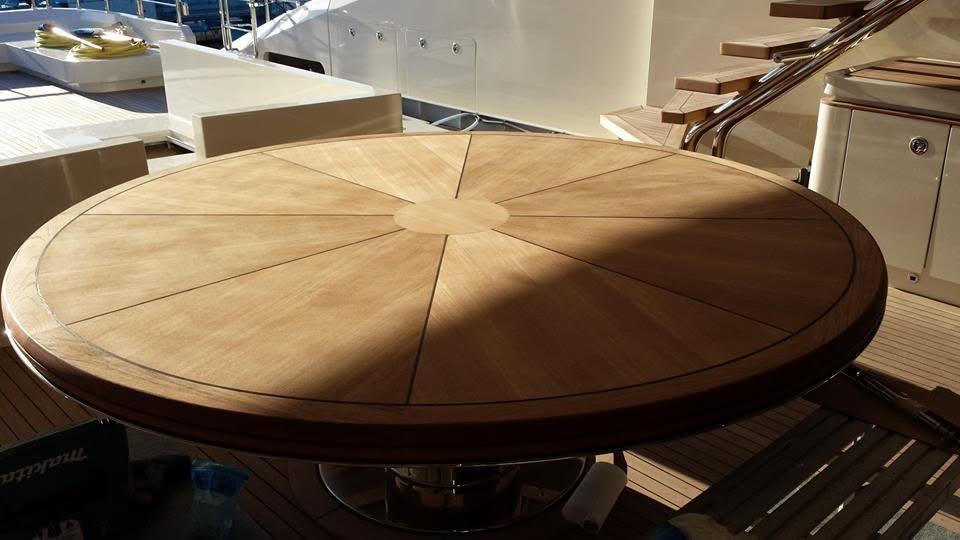
A large round dining table in solid teak with a radial sunburst top — staves running out from a central medallion like the spokes of a wheel, separated by inlaid dark filets and closed by a rounded solid edge — mounted on a single polished stainless steel pedestal. The finish is natural sanded, matched to the surrounding deck rather than varnished.

A radial top is unforgiving. Every stave has to taper at exactly the same angle so that all of them meet cleanly at the central medallion with no gap and no overrun, and the dark inlaid filets between them have to hold a consistent width the whole way out to the edge. On a large round top that means dozens of identical joints converging on a single point — the kind of geometry where a fraction of a degree, multiplied around the circle, becomes visible.

Finished by sanding to a soft matt surface that ties it to the deck, and mounted on its polished stainless pedestal, the table sets the warmth and rhythm of the sunburst against the clean line of the steel. A bespoke centrepiece detailed to belong to its deck rather than sit on top of it.

Bespoke · Exterior furniture

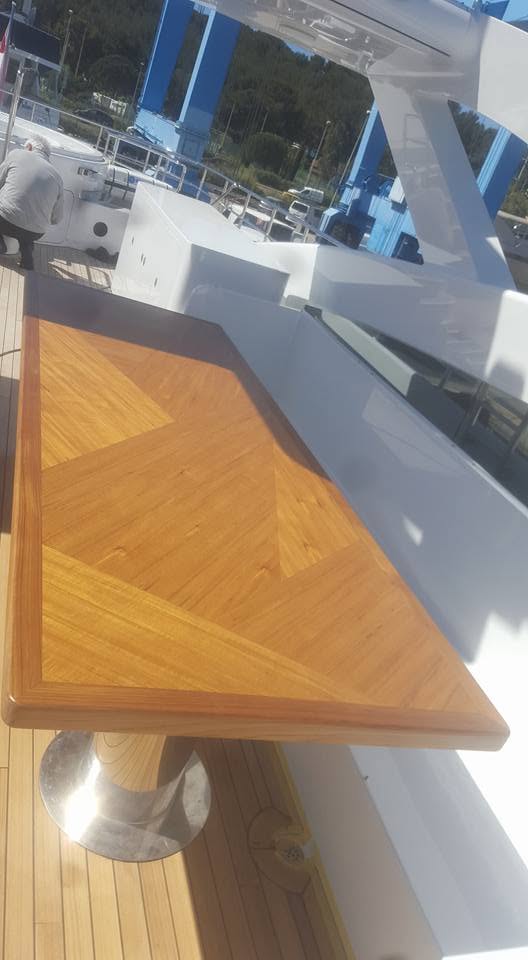
Extending marquetry deck table

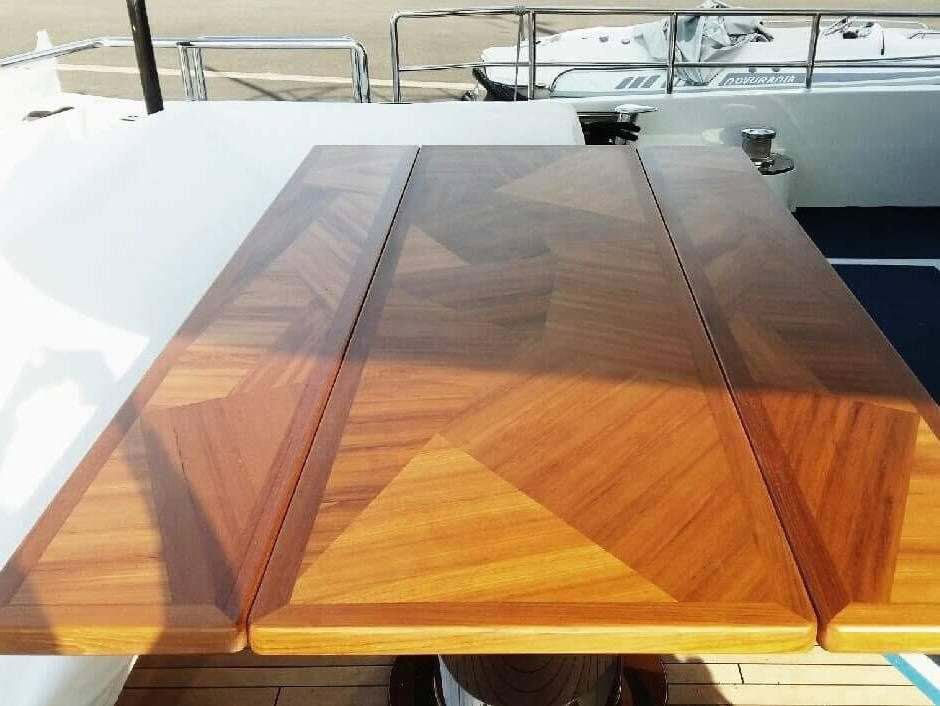
A rectangular deck table in solid teak with a geometric marquetry top and two extension leaves, finished in varnish and mounted on a polished stainless steel pedestal. It combines two demanding disciplines in one piece: decorative marquetry and a working extension mechanism.

The marquetry top is assembled from shaped pieces of teak set into a geometric pattern, every joint tight and every line true, so that the figure of the wood does the decorative work without any inlay of another material. The two extension leaves add the harder problem: the pattern and the surface have to continue across the leaves so that the top reads as one design whether closed or extended, and the leaves have to sit dead flush with the fixed top in both positions. Rounded solid edges frame the whole thing and a varnished finish protects and lifts the marquetry.

Workshop-fabricated and fitted on board, the finished table works as flexible outdoor dining — compact when closed, generous when extended — while carrying a decorative top made entirely in teak. Bespoke deck furniture that earns its place through both its mechanism and its craftsmanship.

A first selection from our yards and workshop. Detailed case pages with full before / after series will follow on the production site.
WhatsApp · direct reply